
The importance of India as a source of materials for businesses that seek to diversify their international sources of supplies has increased considerably. India offers a wide range of advantages that makes it very popular among potential clients from various industries due to its powerful manufacturing sector, skilled labor force, vast network of suppliers, competitive production facilities, and diversified range of products.
Indian firms produce a broad range of items ranging from textiles and pharmaceutical products to engineering items, agricultural products, chemicals, handicrafts, and IT services for buyers from all over the world. Sourcing from Indian producers may be an interesting option for international businesses not only because it allows them to choose from established Indian producers but also to find emerging producers that have certain competitive advantages.
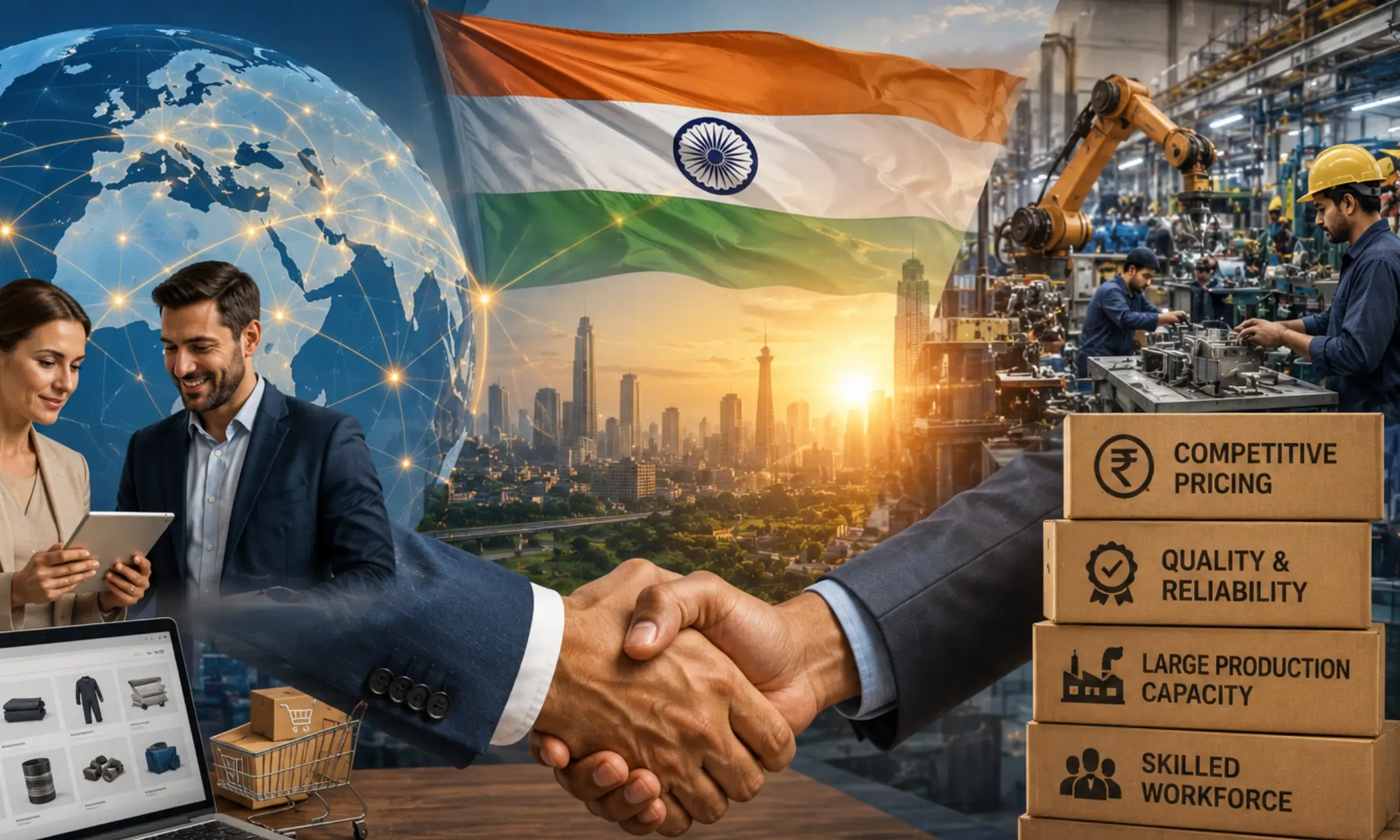
A number of reasons can account for Why Global Buyers Prefer India in the process of international sourcing. Price competitiveness is one of them, but there are other equally important criteria that buyers consider.
India’s Diverse Product and Manufacturing Base
Amongst India’s strengths is the availability of diversity of products and industries within the Indian economy.
Sourcing options that fall into major categories are:
- Textile and garments.
- Pharmaceuticals and health care products.
- Engineering goods and machinery.
- Automotive parts.
- Agro based and processed food products.
- Chemicals and plastics.
- Leather and leather goods.
- Jewelry and handicrafts.
- Electronics and electrical goods.
Such diversity enables buyers to explore various sourcing options within one big market. It is also useful for diversification of sourcing options rather than relying heavily on one country.
Competitive Production Costs
Competitive cost will still be relevant to international sourcing professionals. The availability of manpower, industrial base, and supply chains in India will assist manufacturers to stay competitive in many product categories.
Nonetheless, competitive sourcing does not entirely revolve around the issue of price. International purchasers are now looking at total value, which includes product quality, dependability, production capability, logistical issues, and responsiveness.
Indian suppliers who offer competitive prices and quality products will be ideal sourcing partners.
Skilled Workforce and Industry Expertise
There is a vast range of skilled professionals, technicians, engineers, designers, and factory workers in India. It helps in supporting various industries from traditional manufacturing to modern technology and specific services.
Many companies in India have accumulated considerable experience in serving domestic and international clients. This experience can help the supplier to know international standards of quality, production and business processes.
Access to particular expertise can be quite helpful for the buyer when searching for a specialized technically difficult or customized goods.
Strong Supplier Ecosystem
India’s manufacturing environment includes large companies, exporters, specialized manufacturers, and MSMEs. In other words, there is a big supplier network for international buyers with various procurement needs.
Large buyer may need a high-volume manufacturer, but small company may require a specialized manufacturer to produce custom orders. The diversified supplier network of India allows using various business models.
Also, the diversified supplier network provides an opportunity to find alternative suppliers and decrease reliance on a narrow range of international suppliers.
Growing Export Capabilities
The Indian companies have huge experience working in international markets. There are many Indian exporters that already have systems of handling international orders, documentation, packaging, delivery, and communications.
It makes the sourcing process easier for the overseas buyer.
Also, companies with export experience are more likely to know requirements concerning international delivery, customs regulations, product specifications, and market expectations.
Working with exporters can simplify some operational issues for international buyers.
Quality and Product Customization
Many international buyers do not need standardized products. They require a product with certain dimensions, material, packaging, design, specification, production process, etc.
Indian manufacturers in various sectors can offer customization based on buyer’s requirements. Such possibility can be helpful for private label businesses, distributors, retailers, and industrial buyers.
Expectations concerning quality also grow. Indian manufacturers supplying to international markets pay a lot of attention to certifications, quality control, testing, and standard production processes.
Buyer needs to evaluate supplier individually, but India’s manufacturing sector provides a wide range of businesses.
Opportunities Across Multiple Industries
Textiles & Apparel
India is well-known for its textile and apparel capabilities. Fabrics, ready-made clothing, home furnishings, traditional textiles, and custom-made products can be sourced from a vast number of manufacturers.
Pharmaceuticals
In India’s pharmaceutical industry, there is access to an extensive manufacturing and R&D environment for foreign buyers. However, pharmaceutical sourcing has to take into account destination-country legislation and regulations related to certificates and product approvals.
Engineering & Automotive Components
Indo-manufactured machinery, industrial goods, engineering components, auto parts, electrical goods, and various manufactures are available for domestic and export markets.
Food & Agriculture Products
There are multiple sources of spices, rice, processed foods, fruits, vegetables, and other food products due to the diversity of agriculture in India. Products have to meet food safety, packing, labeling, and other requirements of the destination countries.
India’s Strategic Position
India’s geographical location provides access to international shipping routes which connect Asia, the Middle East, Europe, and other continents. India’s expanding port facilities, highways, logistics, and freight networks support international trade.
India’s partnerships with other countries are also an opportunity for sourcing. India-UAE Comprehensive Economic Partnership Agreement can provide market access under more favorable conditions for some products.
For buyers, this makes India an increasingly attractive location for sourcing and logistics operations.
Increasing Focus on Supply Chain Diversification
The global business world has seen an increase in the need to diversify supply chains. The dependence of companies on just one country or one supplier increases the chances of disruption of the business due to geopolitical, logistical, economic and other unforeseen situations.
India may serve as one of many countries involved in the supply chain of the business. Indian suppliers may be analyzed against other suppliers in order to gain flexibility and protection from unexpected supply chain risks.
However, this doesn’t mean that the company will replace all its current suppliers.
India will give new opportunities to the company in terms of managing supply chain risks.
Digital Platforms Are Making Indian Suppliers Easier to Discover
Technology has also changed the way of searching for new suppliers in international markets. Buyers can search for manufacturers and analyze the product information using online platforms that connect buyers with sellers.
Completing a comprehensive and correct digital profile may increase the visibility of Indian suppliers among international buyers.
The use of business information, product catalogues, certifications, company description and effective communication may prove useful when evaluating new suppliers.
As the practice of digital sourcing develops further, the technology makes it possible for small Indian businesses to be seen in the international market.
What International Buyers Should Consider
However, even in spite of all the advantages of using the Indian suppliers, potential buyers should not forget about the due diligence process that needs to be carried out in order to avoid unpleasant surprises after starting the cooperation.
Among others, it is necessary to consider such aspects as:
- Supplier’s experience and manufacturing capacities.
- Product quality and certifications.
- Prices and payment terms.
- Minimum order quantity.
- Exporter experience.
- Time frames for production and shipping.
- Compliance with the rules of destination markets.
- Communication and customer support.
- Relevant references or previous customers from other countries.
Low price should not be the sole criteria of assessing a supplier.
How Indian Exporters Can Attract Global Buyers
There are several things that can help Indian exporters attract the attention of foreign buyers.
First, it is crucial to have professional websites or at least digital presentations that will provide all necessary information about the product specifications, certifications, manufacturing capacities, exporter experience, etc.
Also, prompt response to inquiries can play an important role since international buyers usually compare several suppliers before choosing one.
Besides, participation in international trade shows and other related activities can be beneficial for expanding contacts.
There are various factors that make International Buyers Love India as the sourcing destination, such as diversity in manufacturing capacity, competitive production, skilled labor force, efficient supply chain, and exporting facilities.
In various industries in India, there are multiple options for sourcing textiles, pharmaceuticals, engineering items, food items, automobile parts, and customized manufacturing. Even experienced Indian exporters can be helpful in handling international orders and logistics.
Nevertheless, in order to source successfully, one must find the right supplier, not necessarily the right country. It is crucial to evaluate such criteria as quality, capacity, certifications, communications, pricing, and reliability.
As global companies continue diversifying their supply chains, India is well positioned to become an increasingly important sourcing partner for businesses seeking quality, flexibility, and long-term international supply opportunities.
FAQs: Why International Buyers Prefer Sourcing from India
International buyers consider India because of its diverse manufacturing base, competitive production costs, skilled workforce, supplier network, export capabilities, and product customization options.
Buyers can source textiles and apparel, pharmaceuticals, engineering goods, machinery, automotive parts, food and agriculture products, chemicals, leather goods, electronics, jewelry, and handicrafts.
Buyers should evaluate supplier experience, manufacturing capacity, product quality, certifications, pricing, payment terms, minimum order quantity, export experience, delivery timelines, and communication.
Indian exporters can improve their digital presence, provide detailed product and company information, respond quickly to enquiries, participate in international trade shows, and demonstrate their manufacturing and export capabilities.
Digital platforms allow buyers to discover Indian manufacturers, review product information, compare suppliers, and evaluate business profiles, helping smaller Indian businesses improve their international visibility.