
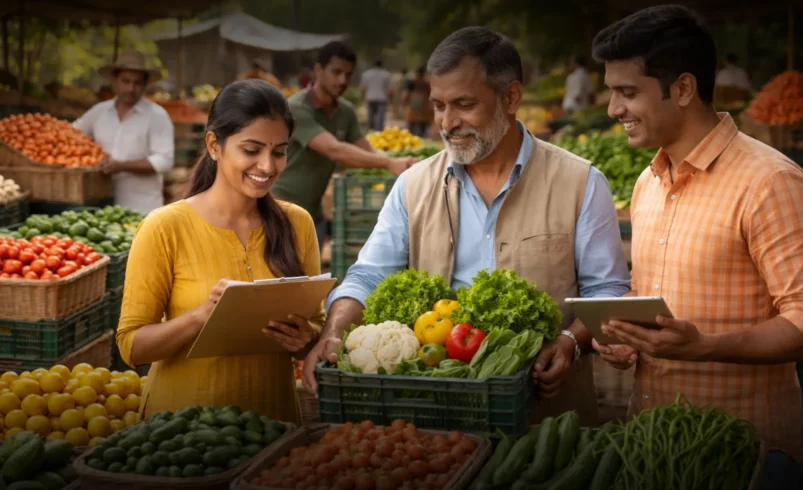

The demand for organic produce is no longer limited to niche markets. Across the globe, consumers and businesses are actively shifting toward healthier, chemical-free food options. This shift is creating massive opportunities for India’s organic fruits and vegetables sector, especially in the B2B space.
From domestic retail chains to international buyers, the need for reliable organic produce suppliers and exporters is growing rapidly. For Indian businesses, this is a strong moment to expand into bulk organic produce and global trade.
Industry Overview and Market Size
The organic food industry is witnessing strong global growth, driven by health awareness and sustainability concerns.
Key industry stats:
The global organic food market is valued at over USD 220 billion
Expected growth rate is around 10–13% CAGR
India has over 2.5 million hectares under organic cultivation
Organic exports from India are growing steadily, especially to the US and Europe
Rising demand for organic farm products across retail and institutional buyers
India is among the leading suppliers of organic agricultural products, making it a key player in the global supply chain.
What is Driving Demand for Organic Produce
The increasing demand for organic fruits and vegetables is influenced by multiple factors.
Health Awareness — Consumers are becoming more conscious about pesticide-free and chemical-free food.
Global Food Safety Concerns — Buyers prefer traceable and certified food products.
Sustainability and Environmental Impact — Organic farming practices are considered more eco-friendly.
Premium Market Demand — High-income consumers are willing to pay more for organic products, boosting demand for premium organic fruits exporter and specialty suppliers.
Key Product Segments in Organic Trade
The organic produce industry includes a wide range of product categories catering to B2B buyers.
Organic Fruits
Products include:
Mangoes, bananas, apples
Berries and citrus fruits
Exotic and seasonal fruits
Businesses often connect with organic fruits manufacturers, organic fruits suppliers, and organic fruits exporters.
Organic Vegetables
Products include:
Leafy greens
Root vegetables
Seasonal and exotic vegetables
Buyers rely on organic vegetables manufacturers, organic vegetables suppliers, and organic vegetables exporters for consistent supply.
Bulk Organic Farm Products
Large-scale buyers prefer sourcing from:
Bulk organic produce supplier
Bulk organic farm products wholesaler
These include grains, pulses, and processed organic items.
B2B Buyers in the Organic Industry
Demand for organic produce is driven by multiple business segments.
Major buyers include:
Supermarkets and retail chains
Hotels, restaurants, and catering services
Food processing companies
Export distributors
Online grocery platforms
These buyers often prefer working with high-quality organic produce supplier and verified exporters.
Export Opportunities for Indian Businesses
India has a strong advantage in exporting organic fruits and vegetables due to its diverse climate and agricultural base.
Key Export Markets:
United States
European Union
Middle East
Southeast Asia
Global buyers actively search for:
Organic produce exporters
Organic fruits exporters
Organic vegetables exporters
The demand for farm fresh organic produce supplier is particularly high in premium markets.
Supply Chain and Distribution Dynamics
The organic supply chain requires careful handling to maintain product integrity.
Key Requirements:
Proper storage and cold chain logistics
Certification and traceability
Timely delivery and packaging
Businesses that manage these efficiently gain a competitive advantage in bulk trade.
Certification and Compliance
Exporting organic farm products requires strict compliance with international standards.
Common certifications include:
Organic certification (India Organic, USDA Organic)
Quality and safety certifications
Traceability documentation
Buyers prefer dealing with certified organic produce manufacturers and suppliers.
Industry Trends Shaping Growth
Rising Demand for Bulk Supply — Large buyers are increasingly sourcing bulk organic produce for cost efficiency.
Growth of Online B2B Platforms — Digital platforms are connecting organic produce suppliers with global buyers.
Premiumization of Organic Products — High-quality and branded organic products are gaining traction.
Expansion of Processed Organic Foods — Demand is increasing for packaged and ready-to-use organic food products.
Challenges in the Organic Produce Industry
Despite strong growth, businesses face several challenges.
High Production Costs — Organic farming requires more labor and time.
Supply Chain Gaps — Maintaining freshness during transportation can be difficult.
Certification Complexity — Obtaining and maintaining certifications can be time-consuming.
Price Sensitivity — Organic products are often more expensive, limiting certain market segments.
Growth Strategies for B2B Businesses
Companies can scale in the organic produce sector by adopting the right strategies.
Focus on Bulk Supply — Partnering with bulk organic produce supplier networks helps secure large orders.
Strengthen Export Channels — Target high-demand international markets.
Invest in Cold Chain Infrastructure — Ensures product quality during transit.
Build Brand Trust — Position as a farm fresh organic produce supplier or premium exporter.
Leverage Digital Presence — Online visibility helps attract global buyers searching for reliable suppliers.
Future Outlook
The future of the organic produce industry looks highly promising.
Key growth drivers include:
Increasing health awareness
Expansion of global organic markets
Rising export demand
Government support for organic farming
India is expected to strengthen its position as a global hub for organic fruits and vegetables in the coming years.
The organic produce industry is rapidly evolving into a major B2B opportunity. With growing global demand, Indian businesses have a strong chance to scale exports and build long-term partnerships.
Manufacturers, suppliers, and exporters who focus on quality, certification, and efficient supply chains will be best positioned to succeed in this expanding market.