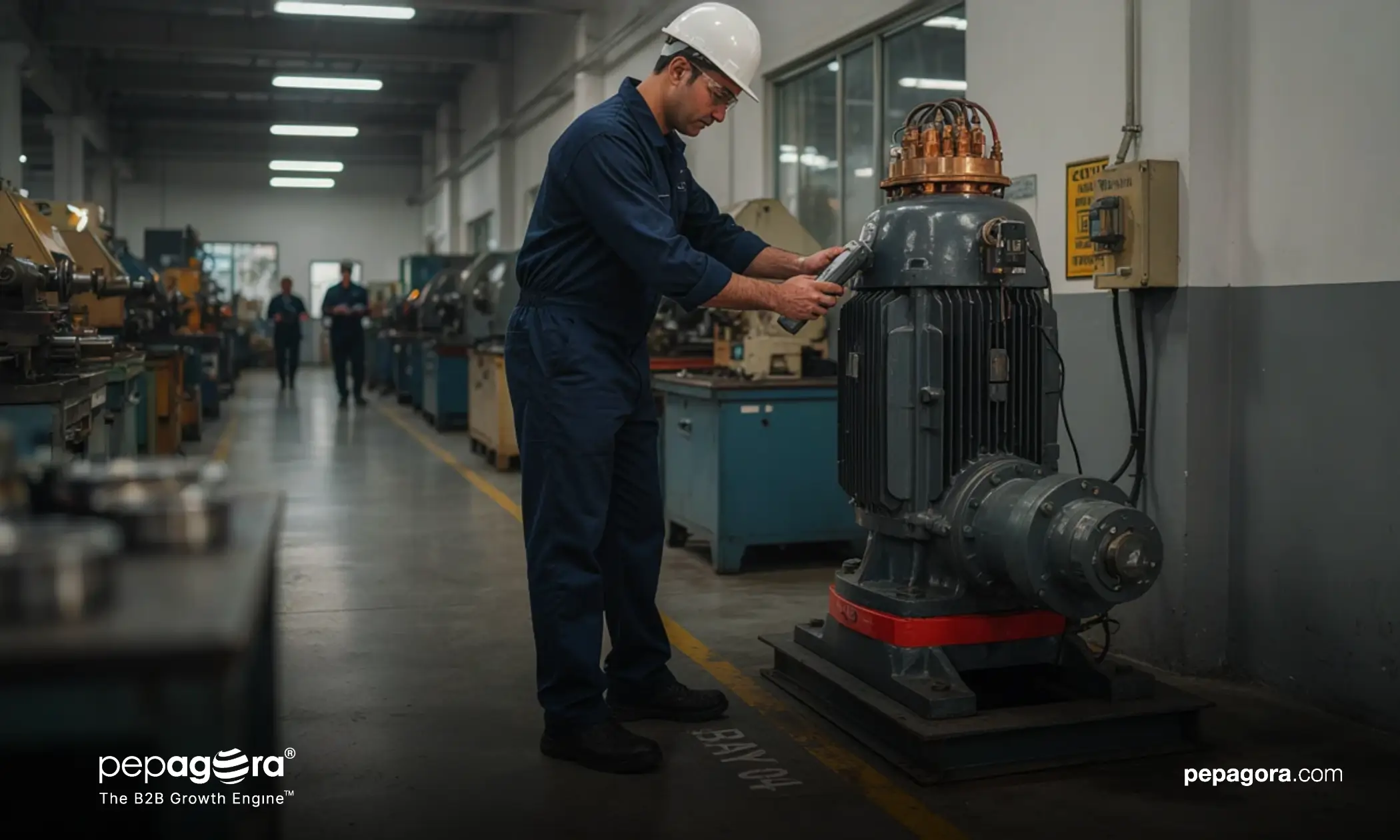
Manufacturing businesses do not always need large-scale automation to improve factory performance. Sometimes, knowing how long a machine operates, when it consumes excess energy or why production slows down can make a significant difference. Industrial Internet of Things (IIoT) technology is making this information more accessible by connecting machines, sensors and digital monitoring systems.
For India’s micro, small and medium enterprises (MSMEs), this creates an opportunity to improve manufacturing efficiency without immediately investing in expensive smart factory infrastructure. Instead of transforming the entire production facility, businesses can connect selected machines and focus on operational problems that directly affect productivity and costs.
What Does Industrial IoT Mean for Small Manufacturers?
Industrial IoT refers to the use of connected sensors, machines and software to collect and exchange operational information. Sensors installed on manufacturing equipment can monitor parameters such as temperature, vibration, operating hours, energy consumption and production output.
This information can be displayed through dashboards, allowing factory managers to understand machine performance without depending entirely on manual inspections.
For example, a small engineering unit could monitor how frequently a CNC machine stops during production. A textile manufacturer could track electricity consumption across different machines, while a food-processing facility could monitor equipment temperatures to maintain operating conditions.
The objective is to convert everyday factory activity into useful operational information.
Four Areas Where Connected Machines Can Deliver Value
1. Better Machine Utilisation
Many small factories do not have accurate information about how efficiently their machines are being used. Connected monitoring systems can record operating hours, idle time and production cycles.
This helps managers identify underutilised equipment, recurring stoppages and production bottlenecks. Better visibility can also support more informed decisions about production schedules and capacity expansion.
2. Reduced Unexpected Downtime
IIoT sensors can identify unusual equipment behaviour, including rising temperatures and abnormal vibration. These signals can alert maintenance teams to potential problems before they result in major breakdowns.
For MSMEs, this can reduce production interruptions and help control emergency repair expenses.
3. Improved Energy Management
Electricity is a significant operating expense for many manufacturing businesses. Connected energy meters can track consumption across machines, production lines or specific operating periods.
This information can help identify equipment that consumes excessive power, unnecessary idle running and opportunities to improve energy efficiency.
4. More Consistent Product Quality
Connected machines can record operating parameters such as pressure, temperature and production speed. Monitoring these conditions helps manufacturers identify variations that may affect product quality.
For businesses supplying automotive, engineering or electronics companies, better process visibility can support more consistent production and quality documentation.
India’s Industry 4.0 Ecosystem Is Supporting MSME Adoption
The adoption of industrial connectivity is receiving attention through India’s smart manufacturing initiatives.
The Ministry of Heavy Industries’ SAMARTH Udyog Bharat 4.0 programme has established specialised centres at institutions including IIT Delhi, C4i4 Lab Pune, IISc Bengaluru and the Central Manufacturing Technology Institute (CMTI), Bengaluru.
These centres support Industry 4.0 awareness, training, technology demonstrations, consultancy and development of solutions for manufacturing businesses. CMTI’s Smart Manufacturing Demo and Development Cell also works on customised smart manufacturing solutions for MSMEs, including connected equipment and industrial IoT applications.
Does Every Factory Need a Connected Machine System?
Not necessarily. The value of Industrial IoT depends on the problem a business wants to solve.
A practical starting point is to identify machines responsible for frequent breakdowns, high energy consumption or production delays. Businesses can then introduce basic sensors, connected meters or machine-monitoring software for those specific assets.
Existing production data can also be used before purchasing additional hardware. This helps manufacturers understand their requirements and avoid unnecessary investment.
The National Productivity Council’s BHARAT 4.0 Digital Readiness Assessment Tool offers another starting point. It helps businesses assess their Industry 4.0 maturity and identify areas for improvement.
Challenges MSMEs Must Address
Despite its potential, IIoT adoption involves practical considerations. Older machines may require additional sensors or connectivity equipment, while inconsistent data collection can affect the usefulness of monitoring systems.
Cybersecurity is another important concern because connected equipment can introduce risks to factory networks. Businesses must also train employees to interpret machine data and respond appropriately to alerts.
Choosing systems that can work with existing equipment and offer reliable technical support is therefore essential.
Moving Towards More Connected Manufacturing
Industrial IoT is not valuable simply because machines are connected to the internet. Its real business value comes from helping manufacturers make better decisions about production, maintenance, quality and energy use.
For Indian MSMEs, a gradual approach can make this technology more practical. Connecting a few critical machines, measuring the results and expanding only where clear benefits emerge can reduce financial risk.
As India’s manufacturing ecosystem moves towards Industry 4.0, connected machines could help smaller factories improve operational visibility and compete more effectively. The shift does not require every MSME to become a fully automated smart factory. It begins with making existing factory operations more measurable, predictable and efficient.
FAQs About Industrial IoT for MSMEs
Industrial Internet of Things (IIoT) refers to connected machines, sensors and software that collect and exchange factory operating data. It helps manufacturers monitor equipment performance, energy consumption, production activity and maintenance requirements.
Industrial IoT can help MSMEs improve machine utilisation, reduce unexpected downtime, monitor energy consumption and maintain consistent product quality. It also provides better operational visibility for production planning and maintenance decisions.
Machines such as CNC equipment, motors, compressors, pumps, production lines and food-processing equipment can use Industrial IoT technology. Businesses can prioritise critical machines where performance monitoring can deliver measurable operational benefits.
Industrial IoT can be adopted gradually without connecting an entire factory. MSMEs can begin with basic sensors, connected energy meters and machine-monitoring software for selected equipment. This helps control initial investment while evaluating the benefits.
Industrial IoT sensors monitor machine conditions such as temperature, vibration and operating hours. Unusual readings can alert maintenance teams to potential equipment problems, helping them investigate issues before major breakdowns occur.

About Author
Harsha Varthan
Harsha is a highly respected B2B marketing expert who passionately helps sellers and buyers connect, grow their businesses online, and build strong global visibility. His expertise spans SEO, content marketing, lead generation, marketplace strategy, public relations, and result-driven digital growth planning, making him a trusted voice in the industry.