
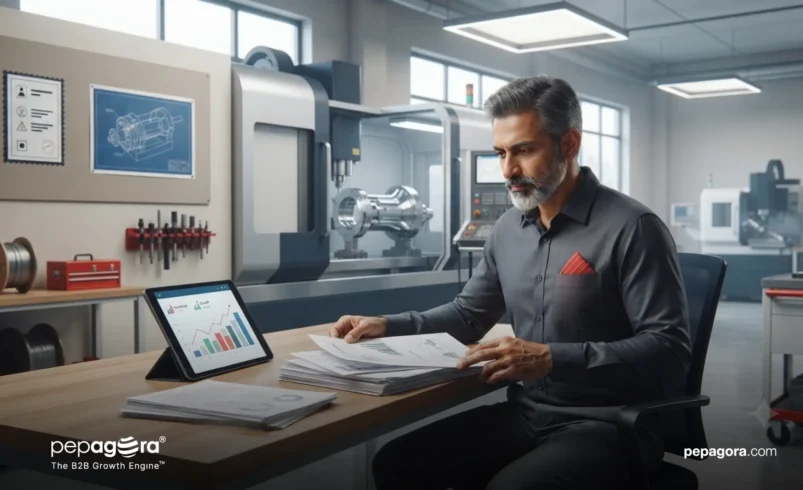

Running a small-scale manufacturing unit in India often feels like a battle on two fronts: managing rising raw material costs on the shop floor while navigating a maze of regulatory paperwork in the office. Yet, while you are busy keeping production lines moving, crores of rupees in central and state government grants, interest subventions, and capital subsidies go unclaimed every year. For Micro, Small, and Medium Enterprises (MSMEs), the Government of India has structured several high-impact schemes specifically designed to modernize machinery, reduce borrowing costs, and lower the financial burden of quality certifications. Knowing how to tap into these programs can directly expand your profit margins without requiring you to sell a single extra unit.
The foundation of accessing any manufacturing benefit in India is Udyam Registration. If your enterprise is still operating on an old Udyog Aadhaar Memorandum or has not yet registered on the Udyam portal, make this your immediate priority. Under the revised MSME classification criteria, a small manufacturing enterprise is defined by an investment in plant and machinery not exceeding ₹10 crore and an annual turnover not exceeding ₹50 crore. Once registered, your unit becomes eligible for priority sector lending, protection against delayed payments from buyers, and direct entry into specialized subsidy programs.
One of the most lucrative yet underutilized schemes for upgrading factory equipment is the MSME Champions Scheme, particularly its MSME Sustainable (ZED) Certification and MSME Competitive (Lean) components. Under the ZED (Zero Defect Zero Effect) scheme, the Ministry of MSME subsidizes up to 80% of the certification cost for micro enterprises, 60% for small enterprises, and 50% for medium enterprises. Beyond the badge of quality, achieving Bronze, Silver, or Gold ZED certification unlocks additional financial incentives: banks offer interest rate concessions of up to 0.5% on term loans and working capital, and state industrial policies frequently provide capital subsidies of up to ₹10 lakh for adopting cleaner, zero-defect manufacturing technologies. Similarly, the Lean scheme provides financial support of up to 90% for hiring expert consultants to eliminate floor-level waste, optimize inventory flow, and boost productivity.
When it comes to expanding capacity or purchasing new machinery, collateral requirements often stall growth for small manufacturers. The Credit Guarantee Fund Trust for Micro and Small Enterprises (CGTMSE) solves this bottleneck by enabling you to secure collateral-free loans of up to ₹5 crore from scheduled commercial banks and NBFCs. For units owned by women, SC/ST entrepreneurs, or located in aspirational districts and the North Eastern Region, the guarantee coverage extends up to 85% to 90%, accompanied by significantly reduced annual guarantee fees. Pairing CGTMSE with the Prime Minister’s Employment Generation Programme (PMEGP) can be even more powerful if you are setting up a new manufacturing unit or executing a major expansion; PMEGP offers a direct margin money subsidy ranging from 15% to 35% of the project cost (up to ₹50 lakh for manufacturing), effectively turning a substantial portion of your loan into a non-repayable grant once the unit operates successfully for three years.
If your manufacturing unit relies heavily on intellectual property, custom tooling, or proprietary product designs, the MSME Innovative Scheme provides direct reimbursements that protect your competitive edge. Through this program, small units can claim up to ₹1 lakh for domestic patent registration, ₹5 lakh for international patents, and ₹15,000 for trademark registration. Additionally, if you collaborate with technical institutions or design studios to develop new prototypes or improve product ergonomics, the design component reimburses up to 75% of the project cost, capped at ₹40 lakh.
Finally, never overlook state-level industrial policies, which operate alongside central schemes. States like Maharashtra, Gujarat, Tamil Nadu, Karnataka, and Assam offer aggressive state-specific incentives—including 100% stamp duty exemptions on industrial land, electricity duty waivers for up to five to seven years, and State GST (SGST) reimbursements on capital investments. To capture these benefits, maintain meticulous digital records of all machinery invoices, bank disbursements, and electricity bills, and consult a specialized MSME project consultant before—not after—purchasing new equipment, as most capital subsidies require prior application approval before the asset is invoiced.
FAQs About Government Subsidies for MSME Manufacturers
Small manufacturers may be eligible for support through schemes such as MSME Champions (including ZED and Lean), CGTMSE, PMEGP and the MSME Innovative Scheme. State governments also offer incentives under their industrial policies.
Udyam Registration is an important eligibility requirement for many MSME benefits and schemes. Manufacturers should check the specific registration and eligibility conditions of each programme before applying.
The ZED scheme encourages manufacturers to improve product quality, reduce waste, strengthen production processes and adopt sustainable manufacturing practices. Eligible MSMEs can also receive financial support towards certification costs.
Eligible micro and small enterprises may obtain collateral-free credit through lending institutions under the CGTMSE framework, subject to applicable loan limits, guarantee coverage and lender approval.
Yes. Several states provide industrial incentives such as capital investment assistance, electricity duty concessions and other eligible benefits. The availability and conditions vary by state, location, industry and investment category.
