
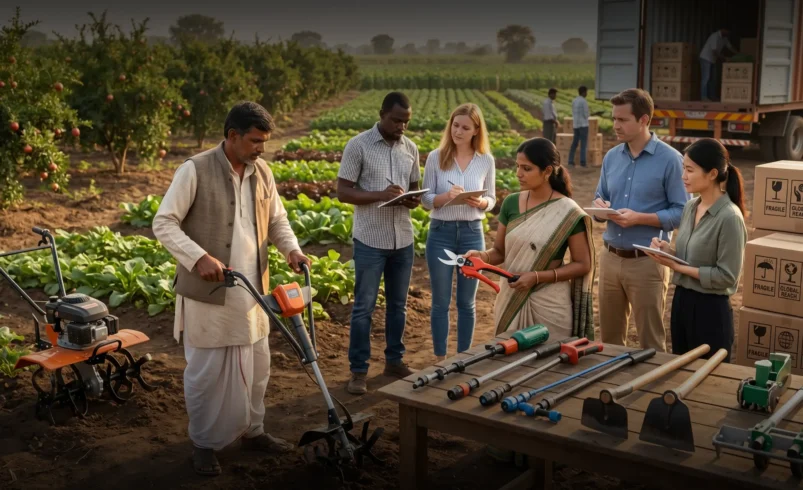

The demand for agricultural gardening tools is steadily rising as farming practices evolve toward efficiency, precision, and scalability. From small farms to large agricultural enterprises, the need for reliable gardening equipment and durable hand tools for farming has become critical. For B2B buyers, distributors, and exporters, selecting the right tools and sourcing partners directly impacts productivity and long-term profitability.
In today’s competitive agricultural ecosystem, businesses must focus on quality, bulk procurement strategies, and strong supplier networks to stay ahead.
Understanding the Importance of Agricultural Gardening Tools
Agricultural gardening tools form the backbone of daily farming operations. These tools are used for soil preparation, planting, irrigation support, maintenance, and harvesting.
Common categories include:
Soil preparation tools such as spades, hoes, and cultivators
Planting and seeding tools
Pruning and cutting equipment
Irrigation support tools
Harvesting implements
Reliable gardening equipment ensures efficiency, reduces labor effort, and improves output consistency.
Growing Demand for Bulk Farm Tools in B2B Markets
Large-scale farming operations and agri-distributors increasingly depend on bulk farm tools to maintain uniformity and reduce procurement costs.
Working with a bulk gardening tools supplier offers:
Cost advantages through volume purchasing
Consistent quality across operations
Faster supply for seasonal demand
Better inventory management
Long-term supply stability
A bulk farm tools exporter plays a crucial role for international buyers looking to source tools at competitive pricing.
Role of Manufacturers in Product Quality and Innovation
Agricultural and gardening tools manufacturers are continuously improving designs to enhance durability and usability.
Leading farm hand tools manufacturers focus on:
Ergonomic designs for ease of use
High-strength materials for durability
Corrosion-resistant coatings
Lightweight yet robust construction
Businesses that collaborate with reliable manufacturers gain access to tools that perform consistently under demanding conditions. To explore how modern machinery is transforming small farm operations, read Why Small Farms Need Modern Agriculture Machinery in 2026.
Choosing the Right Suppliers for Consistent Supply
Selecting dependable agricultural and gardening tools suppliers is essential for uninterrupted operations.
Key factors to evaluate include:
Product quality and material standards
Manufacturing capacity and scalability
Delivery timelines and logistics efficiency
Availability of customization options
After-sales support
Farm hand tools suppliers with strong distribution networks ensure timely delivery and consistent availability.
Importance of Wholesalers and Exporters in Distribution
Agricultural and gardening tools wholesalers bridge the gap between manufacturers and end buyers, especially in regions with limited direct access.
On the global front, agricultural and gardening tools exporters manage:
International logistics and shipping
Compliance with import regulations
Bulk order processing
Documentation and certifications
Farm hand tools exporters enable businesses to expand into international markets with ease.
Hand Tools for Farming: Practical and Cost-Effective Solutions
Despite advancements in mechanization, hand tools for farming remain indispensable, particularly for small and medium farms.
Key advantages include:
Low cost and easy maintenance
Suitability for diverse farming conditions
Flexibility in usage across different tasks
Reduced dependency on fuel or electricity
A high-quality hand tools supplier ensures durability and performance in daily operations.
Premium Tools and Organic Equipment Demand
The market is witnessing increased demand for specialized and eco-friendly tools.
A premium gardening tools supplier typically offers:
High-performance and long-lasting tools
Advanced designs for professional use
Enhanced safety and comfort features
An organic gardening equipment wholesaler focuses on tools designed for sustainable farming practices, supporting chemical-free and environmentally friendly agriculture.
Quality Parameters That Define Tool Performance
Quality plays a critical role in the effectiveness and lifespan of agricultural tools.
Key indicators include:
Strength and durability of materials
Resistance to rust and wear
Ergonomic design for user comfort
Ease of maintenance and repair
Consistency in manufacturing standards
Working with established agricultural and gardening tools suppliers ensures adherence to these parameters.
Logistics and Bulk Procurement Considerations
Efficient logistics are essential when sourcing tools in large quantities.
Important considerations include:
Packaging to prevent damage during transit
Timely delivery aligned with farming cycles
Inventory planning for seasonal demand
Coordination with suppliers for repeat orders
A bulk gardening tools supplier with strong logistics capabilities can significantly improve supply chain efficiency.
Pricing Strategy in Bulk Sourcing
Pricing varies based on material quality, manufacturing standards, and order volume.
Buyers should evaluate:
Cost per unit in bulk purchases
Long-term durability versus initial price
Discounts for large orders
Payment and credit terms
Direct sourcing from agricultural and gardening tools wholesalers or manufacturers often ensures better pricing and reliability.
Building Long-Term Supplier Relationships
Strong supplier relationships are essential for consistent quality and supply.
Best practices include:
Clear communication of requirements
Regular performance reviews
Timely payments and contract adherence
Long-term agreements for stability
Reliable partnerships lead to better service, priority supply, and improved commercial terms.
Emerging Trends in Agricultural Tools Industry
The agricultural tools market is evolving with changing farming practices.
Key trends include:
Increasing demand for durable and ergonomic tools
Growth in eco-friendly and sustainable equipment
Expansion of export markets for farming tools
Integration of basic technology in traditional tools
Agricultural and gardening tools manufacturers and suppliers are adapting to these trends to meet future demand.
Final Thoughts
Agricultural gardening tools remain a fundamental component of modern farming, supporting efficiency, productivity, and scalability. For B2B buyers, success depends on sourcing high-quality tools, building reliable supplier networks, and adopting strategic procurement practices.
Whether working with agricultural and gardening tools manufacturers, sourcing from a bulk gardening tools supplier, or expanding globally through agricultural and gardening tools exporters, every decision impacts operational success.
A well-planned approach to procurement and supplier management can help businesses achieve long-term growth in the competitive agricultural sector.