
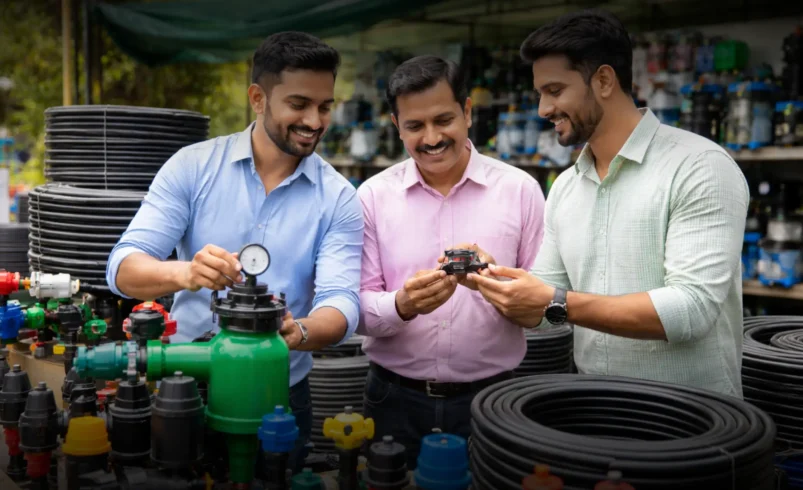

Water management has become one of the most critical challenges in modern agriculture. With increasing pressure on water resources and the need to improve crop productivity, the demand for advanced irrigation systems equipment is rising rapidly across global markets. For B2B buyers, agri-distributors, and project developers, sourcing the right solutions is no longer optional. It is a strategic necessity.
From bulk irrigation equipment to precision-driven drip and sprinkler systems, businesses that build strong sourcing networks are better positioned to support large-scale agricultural operations.
Understanding the Scope of Irrigation Systems Equipment
Irrigation systems equipment includes a wide range of technologies and tools designed to deliver water efficiently to crops while minimizing wastage.
Key categories include:
Drip irrigation systems for targeted water delivery
Sprinkler systems for uniform field coverage
Pumps, pipes, and filtration systems
Automated irrigation controllers
Farm irrigation tools for installation and maintenance
These systems are essential for improving yield, conserving water, and ensuring consistent crop growth.
Why Bulk Procurement is Essential for Agricultural Projects
Large farms, government projects, and agri-infrastructure developers prefer sourcing bulk irrigation equipment to ensure uniformity and cost efficiency.
Working with a bulk irrigation equipment supplier offers several advantages:
Lower procurement costs through volume purchasing
Standardized equipment specifications
Easier installation and maintenance planning
Consistent supply for large-scale deployment
Better margins for distributors and contractors
A bulk sprinkler systems wholesaler is especially valuable for projects requiring extensive field coverage.
Role of Manufacturers in Innovation and Quality
Irrigation systems and equipment manufacturers play a critical role in defining product performance, durability, and efficiency. Buyers who work directly with manufacturers often gain access to advanced technologies and customization options.
Leading drip irrigation manufacturers and sprinkler systems manufacturers focus on:
Water-efficient designs to reduce wastage
Durable materials suitable for harsh field conditions
Easy installation and low maintenance systems
Integration with automation and smart controls
Innovation in irrigation technology is helping farmers achieve higher productivity with lower resource consumption. For a broader look at how technology is reshaping agriculture, read Agri-Industry Growth Driving Technology in Modern Farming.
Selecting the Right Suppliers for Long Term Success
Choosing reliable irrigation systems and equipment suppliers is essential for ensuring consistent quality and timely delivery.
Key factors to evaluate include:
Production capacity and scalability
Quality certifications and testing standards
Availability of spare parts and after-sales support
Logistics and delivery capabilities
Experience in handling large projects
Drip irrigation suppliers and sprinkler systems suppliers with strong distribution networks can support both domestic and international requirements.
Importance of Wholesalers and Exporters in Distribution
Irrigation systems and equipment wholesalers help bridge the gap between manufacturers and end users, especially in regions where direct access is limited.
On the global front, irrigation systems and equipment exporters manage logistics, compliance, and cross-border documentation. Partnering with experienced drip irrigation exporters or sprinkler systems exporters simplifies international procurement.
Benefits include:
Efficient handling of bulk shipments
Knowledge of international quality standards
Reduced risk of delays
Streamlined customs clearance processes
This is particularly important for large agricultural or government-backed irrigation projects.
Drip Irrigation: Precision and Efficiency
Drip irrigation systems are gaining popularity due to their ability to deliver water directly to the root zone of plants.
Advantages include:
Significant water savings
Improved crop yield and quality
Reduced weed growth
Lower fertilizer wastage
Working with a high-quality drip irrigation supplier ensures reliability and long term performance, especially in water-scarce regions.
Sprinkler Systems: Versatility and Coverage
Sprinkler systems are widely used for crops that require uniform water distribution across large areas.
Key benefits include:
Suitable for a wide range of crops
Easy installation and operation
Effective for uneven terrain
Scalable for different farm sizes
A bulk sprinkler systems wholesaler can support large-scale deployments with consistent product availability.
Growing Demand for Premium and Organic Solutions
As agriculture becomes more specialized, there is increasing demand for advanced and sustainable irrigation solutions.
A premium irrigation systems supplier typically offers:
High-efficiency automated systems
Smart irrigation controllers
Durable and long-lasting components
Customized solutions for large farms
At the same time, an organic farm irrigation exporter focuses on eco-friendly systems that support sustainable farming practices.
Evaluating Equipment Quality and Performance
Quality is a critical factor in irrigation system procurement. Equipment must perform reliably under continuous usage and varying environmental conditions.
Key quality indicators include:
Resistance to corrosion and wear
Efficiency in water distribution
Ease of installation and maintenance
Compatibility with existing systems
Availability of replacement components
Working with established irrigation systems and equipment suppliers ensures consistent performance.
Logistics and Installation Considerations
Irrigation systems require careful planning for transportation, installation, and setup.
Important considerations include:
Proper packaging to prevent damage
Efficient transportation for bulk equipment
On-site installation support
Training for system operation and maintenance
Experienced irrigation systems and equipment exporters often provide end-to-end solutions for project execution.
Pricing Factors in B2B Irrigation Procurement
Pricing depends on system type, material quality, automation level, and order volume.
Buyers should evaluate:
Total project cost including installation
Long term maintenance expenses
Bulk order discounts
Payment terms and financing options
Direct sourcing from irrigation systems and equipment wholesalers or manufacturers often results in better pricing and service support.
Building Long Term Supplier Relationships
Strong supplier relationships are essential for consistent supply and support in irrigation projects.
Best practices include:
Clear communication of project requirements
Regular feedback on product performance
Timely payments
Collaboration for future expansion
Long term partnerships often lead to priority service and better commercial terms.
Emerging Trends in Irrigation Systems
The irrigation industry is evolving rapidly with advancements in technology and sustainability.
Key trends include:
Smart irrigation systems with sensors and automation
Increased adoption of drip irrigation in water-scarce regions
Integration of IoT for real-time monitoring
Focus on sustainable and eco-friendly solutions
Irrigation systems and equipment manufacturers and suppliers are aligning their offerings to meet these changing demands.
Final Thoughts
The demand for irrigation systems equipment is growing as agriculture moves toward efficiency, sustainability, and scalability. For B2B buyers, success depends on selecting the right partners and adopting a structured sourcing approach.
Whether working with irrigation systems and equipment manufacturers, engaging a bulk irrigation equipment supplier, or partnering with drip irrigation exporters and sprinkler systems exporters, each decision directly impacts project success and profitability.
A well-planned procurement strategy, backed by strong supplier relationships and quality evaluation, can help businesses build efficient and future-ready irrigation systems.