
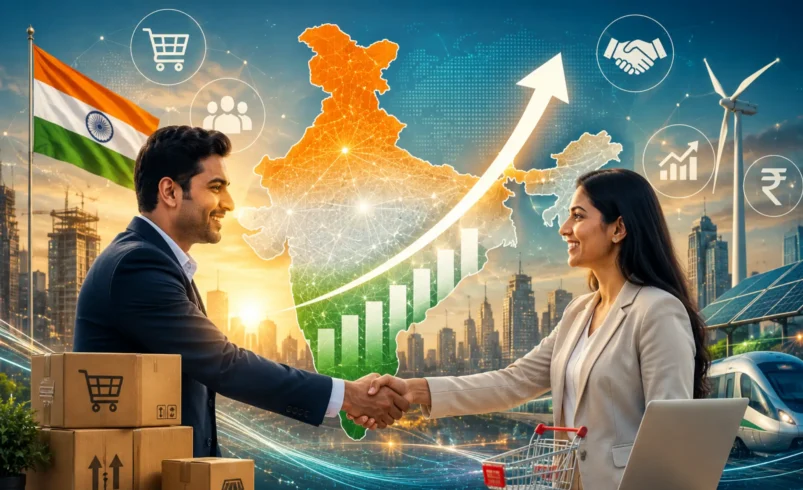

India’s economy is expected to undergo significant transformation by 2030. Driven by digital adoption, manufacturing expansion, infrastructure investments, artificial intelligence, sustainability initiatives, and changing consumer behavior, the country is positioning itself as one of the world’s most influential economic powers.
For businesses, this transformation presents both challenges and opportunities. Buyers will gain access to larger supplier networks and smarter procurement tools, while sellers will benefit from expanding domestic demand and growing access to international markets.
Understanding the key trends shaping the next five years could help businesses make better strategic decisions and stay ahead of competitors.
Manufacturing Will Continue to Drive Growth
India’s manufacturing sector is expected to play a central role in economic growth through 2030. Government initiatives aimed at strengthening domestic production and attracting global investments are encouraging companies to establish manufacturing facilities across the country.
Industries likely to see strong growth include:
- Engineering products
- Electronics
- Automotive components
- Chemicals
- Pharmaceuticals
- Renewable energy equipment
- Industrial machinery
As global companies diversify supply chains, Indian manufacturers may gain larger shares of international sourcing contracts. For buyers, this means greater supplier diversity and improved sourcing options. For sellers, it creates opportunities to enter global value chains.
Digital Commerce Will Expand Beyond Major Cities
The next wave of business growth is expected to come from Tier-2 and Tier-3 cities. Improved internet connectivity, digital payment systems, and logistics infrastructure are enabling businesses in smaller cities to reach customers nationwide.
Manufacturers, wholesalers, distributors, and service providers are increasingly using digital channels to generate leads and expand their market reach. By 2030, digital visibility may become as important as physical presence.
Artificial Intelligence Will Become Mainstream
Artificial Intelligence is rapidly moving from experimentation to practical business applications. Businesses are already using AI for:
- Customer support
- Demand forecasting
- Inventory management
- Marketing automation
- Procurement analysis
- Sales forecasting
As technology becomes more affordable, even small businesses are expected to adopt AI-driven tools. Companies that embrace automation early may achieve higher productivity and lower operational costs.
Procurement Is Becoming More Digital
Traditional sourcing methods are gradually being replaced by digital procurement platforms. Modern buyers increasingly prefer:
- Online supplier discovery
- Digital product catalogs
- Verified business profiles
- Electronic quotations
- Digital negotiations
This trend is creating a more transparent and efficient sourcing environment. For sellers, maintaining a strong digital presence is becoming essential for attracting serious buyers.
Sustainability Will Influence Buying Decisions
Environmental considerations are becoming increasingly important in business decision-making. Large organizations are paying closer attention to:
- Sustainable sourcing
- Energy-efficient production
- Waste reduction
- Green packaging
- Carbon footprint management
Businesses that invest in sustainable practices may gain competitive advantages as buyers place greater emphasis on environmental responsibility.
Exports Will Become More Accessible for SMEs
Historically, exporting was often dominated by large corporations. That is changing. Digital trade platforms, improved logistics infrastructure, and expanding trade agreements are making international markets more accessible to small and medium enterprises.
Sectors likely to benefit include:
- Manufacturing
- Agriculture
- Food processing
- Chemicals
- Engineering goods
- Textiles
Businesses that invest in export readiness may find substantial growth opportunities over the next decade.
Trust Will Become a Key Business Asset
As digital transactions increase, trust will become a major factor influencing buying decisions. Buyers increasingly evaluate suppliers based on:
- Business credibility
- Certifications
- Product quality
- Customer reviews
- Response speed
- Transparency
Verified business profiles and strong reputations may become powerful competitive differentiators. In many industries, trust could influence purchasing decisions as much as pricing.
Data-Driven Decision Making Will Accelerate
Businesses are generating more data than ever before. Organizations that effectively use data analytics can improve:
- Customer acquisition
- Pricing strategies
- Inventory planning
- Supply chain management
- Market expansion
Data-driven companies are expected to make faster and more informed business decisions compared to competitors relying solely on traditional approaches.
Infrastructure Development Will Create New Markets
India’s ongoing investments in highways, railways, airports, ports, industrial corridors, and logistics parks are expected to reshape economic activity. Improved connectivity can:
- Reduce transportation costs
- Improve delivery timelines
- Expand market access
- Increase trade efficiency
Businesses located outside major metropolitan areas may particularly benefit from these developments.
Opportunities for Buyers and Sellers
For Buyers
Buyers can expect:
- Larger supplier networks
- Greater product variety
- Improved sourcing transparency
- Faster procurement cycles
- Better digital procurement tools
For Sellers
Sellers may benefit from:
- Increased domestic demand
- Expanded export opportunities
- Access to digital marketplaces
- Improved logistics infrastructure
- New customer acquisition channels
Businesses that adapt quickly to changing market conditions are likely to capture the greatest opportunities.
Looking Toward 2030
India’s business landscape is entering a period of rapid evolution. Technology, manufacturing growth, sustainability, digital procurement, and expanding global trade are reshaping how companies buy, sell, and compete.
For both buyers and sellers, success will depend on adaptability, visibility, trust, and innovation. The businesses that recognize emerging trends early and invest in future-ready capabilities today may be best positioned to thrive in India’s economy of 2030.
