
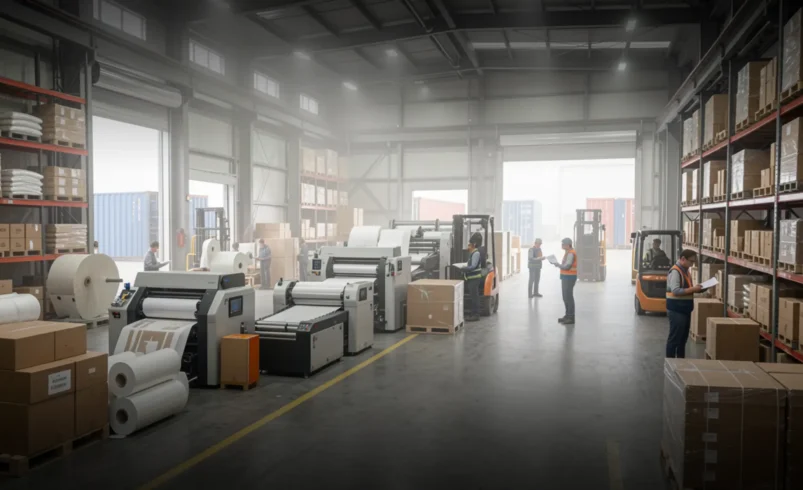

The global printing and packaging industry—an essential pillar supporting manufacturing, branding, and consumer goods—is facing unprecedented pressure due to escalating geopolitical tensions. Regional conflicts, particularly in the Middle East, are disrupting trade routes, energy supplies, and raw material flows.
These disruptions ripple across supply chains worldwide, affecting everything from lamination films to aluminum plates. For packaging and printing suppliers, resilience has become the defining factor for survival.
Geopolitical Tensions and Their Economic Impact
The packaging industry depends heavily on uninterrupted access to raw materials and energy. Instability in energy-producing regions has heightened uncertainty across global markets.
Key consequences include:
- Rising oil prices and energy volatility
- Disruptions to shipping routes and freight schedules
- Increased insurance and transportation costs
- Delays in cross-border procurement
These developments directly affect cost structures and operational continuity, forcing companies to rethink sourcing strategies.
Petroleum-Based Materials Under Pressure
Petroleum-derived inputs remain essential for packaging production. Printing inks, adhesives, and lamination films rely on petrochemical derivatives. When supply chains tighten, availability and affordability decline, creating severe operational challenges.
Critical Materials Affected
Material | Application in Printing | Impact of Disruption |
BOPP & PET Films | Lamination and packaging | Price volatility and shortages |
Printing Inks | Offset, flexo, gravure | Increased production costs |
Adhesives & Coatings | Labeling and finishing | Supply delays |
Polyethylene & Polypropylene | Flexible packaging | Limited availability |
Aluminum | Offset printing plates | Escalating prices |
Logistics and Maritime Disruptions
The Middle East serves as a critical hub for global trade. Strategic maritime corridors face delays, resulting in:
- Extended lead times for raw materials
- Higher transportation and insurance costs
- Inventory shortages and production interruptions
- Increased reliance on alternative sourcing routes
These disruptions highlight the growing importance of resilient and diversified supply chains.
Economic Resilience in the GCC
Despite geopolitical risks, GCC economies remain relatively stable due to diversification strategies and infrastructure investments. Countries such as Qatar, United Arab Emirates, and Saudi Arabia have strengthened logistics capabilities, enabling smoother movement of goods. This resilience provides regional packaging and printing suppliers with opportunities to adapt through innovation and strategic sourcing.
Industry-Wide Impact
According to ResearchAndMarkets, the printing market is valued at $356.16 billion in 2026 and projected to reach $420.39 billion by 2030, growing at a 4.2% CAGR despite supply chain pressures.
The cumulative effects of supply chain disruptions are reshaping the industry in several ways:
- Escalating Production Costs – Energy-intensive processes such as offset and gravure printing have become more expensive.
- Material Shortages – Lamination films, inks, and aluminum plates face supply constraints.
- Extended Lead Times – Import delays force companies to maintain larger inventories.
- Price Pressures on Clients – Converters must revise quotations while managing customer expectations.
- Demand for Sustainable Alternatives – The crisis is accelerating interest in eco-friendly materials and recyclable packaging solutions.
Strategic Responses for Industry Resilience
To navigate ongoing disruptions, companies must adopt proactive strategies:
- Diversification of Suppliers – Reduces dependence on single-source procurement.
- Localization and Regional Sourcing – Strengthens supply chain security.
- Digital Transformation – ERP systems and AI-driven forecasting improve operational efficiency.
- Material Optimization – Lightweight substrates help reduce production and transportation costs.
- Sustainable Innovation – Bio-based inks and recyclable films support long-term resilience.
- Inventory Planning – Strategic stockpiling minimizes operational disruptions.
However, businesses must also recognize that sustainability alone is not enough. As highlighted in Why Recyclable Packaging Still Fails in the Real World, practical implementation challenges continue to impact the effectiveness of eco-friendly packaging solutions.
The Role of Digital B2B Networks
Digital sourcing is transforming packaging procurement. Global B2B marketplaces enable buyers to connect directly with manufacturers, explore product catalogs, and evaluate supplier credibility. For packaging companies, maintaining a strong digital presence is now essential for attracting international buyers and strengthening market visibility.
Final Takeaway
The printing and packaging industry is not collapsing, but it is undergoing significant transformation. Geopolitical tensions have exposed vulnerabilities while accelerating innovation and strategic realignment. Rising costs of lamination films, inks, and aluminum plates underscore the urgency for adaptation.
Organizations that embrace diversification, digitalization, and sustainability will be better positioned for long-term growth. In an era defined by uncertainty, resilience—not stability—will shape the future of packaging and printing suppliers.
FAQs
Geopolitical tensions increase raw material costs, delay shipments, and disrupt supply chains, making production and procurement more challenging for suppliers.
Materials such as BOPP films, PET films, printing inks, adhesives, and aluminum plates face shortages, price volatility, and delayed availability.
Supplier diversification helps companies reduce dependency on single markets and maintain stable operations during global trade or logistics disruptions.
Sustainability is driving demand for recyclable packaging, lightweight materials, and bio-based alternatives despite ongoing implementation challenges.
Pepagora helps suppliers connect with global buyers, improve digital visibility, and explore new sourcing and business opportunities worldwide.

Nuwan combines technical expertise with practical industry understanding, focusing on precision, innovation, and operational excellence. He aims to support readers in understanding modern printing and packaging trends, technologies, and solutions through well-structured and informative content.