
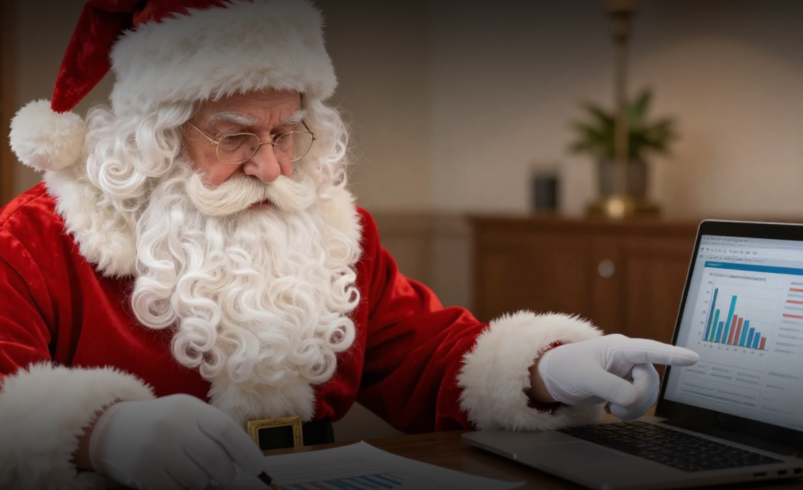

The 2025 Christmas season served as a revealing season for Indian MSMEs in terms of the changes impacting those companies. In 2025, you will see a shift toward digital sources for your purchasing, which reflects the change in expectations from buyers as well as the continuing evolution of the demand profile for most products. The sales frenzy of 2025 illustrated to manufacturers their successes and struggles with the season (with respect to the level of consumer desire), and allowed manufacturers to identify what modifications will be necessary leading into the 2026 sales cycle.
Here is a quick, digestible outline of the things that were learned in the Christmas 2025 selling season along with a little insight on how Pepagora helped its members source and sell better this year.
Christmas 2025: What worked well
- Early Planning / Early Sourcing
Companies that ordered their raw materials by September had reasonably consistent production levels, had stable pricing, and did not experience the typical end of season panic that usually occurs during the Christmas season. Prices increased for yarns, fabrics, packaging materials and electronics accessories in November, but companies that planned ahead were insulated from price fluctuations.
Lesson learned: Plan for festive sales at least 6 months ahead of Christmas.
Â
- Premium or Value-Added Products
Embellished winter wear, curated gift bundles, eco-friendly decor and premium packaging outperformed plain items by large margins. Additionally, buyers were willing to pay a higher price for unique and better finished items.
Lesson learned: When the festive season arrives, the more you differentiate your products, the better margins you will receive.
Â
- Eco-Friendly Products
The growing demand for recycled cotton ornaments, natural dyed textiles and reusable decor led to very strong demand from both domestic and export buyers.
Lesson learned: A focus on eco-friendly product lines provides a return on investment
Â
- New Markets for Exports Have Beaten This Years Performance
The Middle East, South East Asia, and East Africa are very enthusiastic purchasers of Indian garments and handicrafts. Export companies have found new regional customers using the Pepagora platform.
Lessons learned: Don’t rely solely on the US/EU markets.
Â
- The Development of B2B Online Marketplaces has Provided Consistency
Through the implementation of digital platforms providing verified customers and structured communication, the level of fraud has been reduced while improving the accuracy of order information.
Lessons learned: Digital sourcing is now standard practice.
Â
What Did Not Work in Christmas 2025
- Last-Minute Sourcing
Last-minute sourcing created many issues, such as shortages, price hikes, and logistical issues for purchasers who waited until the last minute. By solely sourcing from local traders, MSME’s faced some of the biggest issues.
Takeaway: Create contingency plans for your supply chain and have suppliers outside of your local area.
Â
- Excessive Reliance on 3-5 Clients
Manufacturers who relied on only a handful of large customers faced difficulties due to reduced order volume.
Takeaway: Adding additional buyers to your customer base creates buffers for future business fluctuations.
Â
- Inadequate Product Presentations
When manufacturers did not include important information (high-quality images, product sizes, packaging details, minimum order quantity), they lost sales.
Takeaway: Exquisite digital catalogues will draw new customers.
Â
- Underestimating Small Buyers
MSMEs did not recognize the potential of boutique stores and small ecommerce retailers that had a large, unanticipated demand for their products.
Takeaway: Many small buyers will convert to long-term buying relationships with MSMEs.
Â
- Insufficient Digital Presence
Suppliers with little or no online presence lost opportunities simply because potential buyers could not easily find them.
Takeaway: An online presence for your business is essential to successful sales.
Â
The key takeaway from Christmas 2025
It is that the businesses that did well were not based on being the largest businesses, but rather the businesses that were prepared and ready to take action with a well-diversified, digitally accessible product line.
While holiday shopping is expected to continue to grow, the old method of relying on a local network and a small number of regular customer base will no longer be enough for businesses to survive in the new retail environment.
How Pepagora is Helping MSMEs Succeed this Holiday season
Pepagora works with MSME’s to enable success by providing:
- Identification of verified suppliers to obtain raw materials
- Catalogues online, so that more people can see what products are available
- Access to larger domestic and international markets
- Faster, easier communication between buyers and sellers, allowing for a more structured process
In addition, Pepagora has helped to enhance the ability of thousands of MSME’s to procure materials needed to produce their product lines and get them into the hands of customers more easily.
Planning for Christmas 2026 Action Steps
- Plan ahead of time: Start locating materials and planning to produce products by August/September.
- Partner with new buyers: Add 20 to 30 new potential customers to reduce reliance on your existing customers.
- Identify new categories of products: Include value-added products, seasonal products and environmentally sustainable products.
- Enhance your online presence: Use platforms like Pepagora to create digital catalogues for your products.
- Improve your product’s appearance: Better looking products command higher prices.
- Create an Export Strategy for multiple regions: Identify the Middle East, Africa, and Southeast Asia for potential exports along with the more traditional, established customer bases
Â
Conclusion
Christmas 2025 served as a high season example in your sampling. The key message conveyed from this time, which can serve as an example for Indian MSMEs, is;
“The market rewards readiness & visibility and diversification” (the market will reward those businesses that are ready, have visibility of their products and services, and have created diverse lines of product offerings).
Using digital platforms to strategically source products and proactively catalogue their inventory, and using eBay and Amazon respectively has produced the best results, and continuing these practices during 2026 will produce faster and safer growth than ever before. If you would like assistance in expanding your network of suppliers and buyers before the holidays of 2026, consider checking out Pepagora as a reliable starting point.