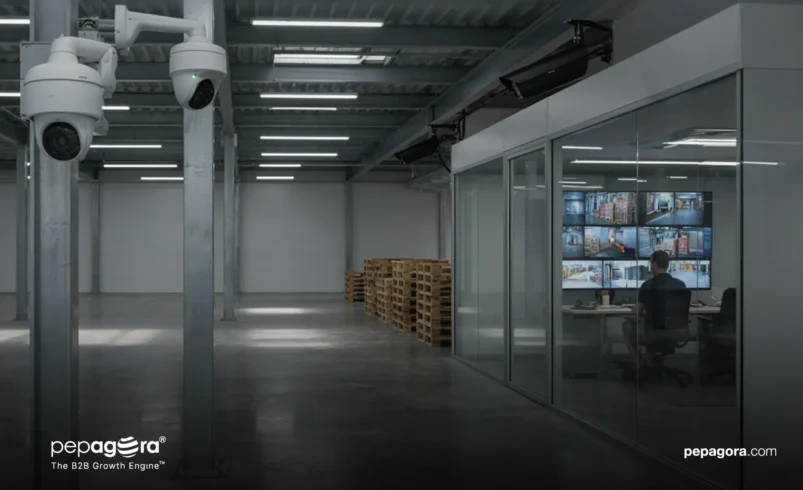

Security is a priority for residential societies, offices, retail stores, warehouses, factories, hospitals, and educational institutions. As properties become larger and daily operations more complex, CCTV surveillance systems have become an important tool for monitoring activities, protecting assets, and investigating incidents. A well-planned security system can help organisations improve visibility, identify suspicious activity, and maintain better control over their premises.
However, effective surveillance requires more than installing cameras at a few locations. Buyers must consider camera quality, recording equipment, storage capacity, network connectivity, installation requirements, and ongoing maintenance. Understanding these factors helps individuals and businesses invest in solutions that meet their security needs without unnecessary expenditure.
Components of a CCTV Security System
A CCTV security system combines multiple components to capture, store, and display video footage. Each component serves a specific purpose, and the overall performance depends on how well these elements work together.
- Security cameras capture video from designated locations. Indoor cameras are commonly used in offices, reception areas, and retail spaces, while weather-resistant outdoor cameras are suitable for entrances, parking areas, and building perimeters. Dome, bullet, and pan-tilt-zoom cameras offer different mounting styles and viewing capabilities.
- Digital video recorders (DVRs) are generally used with analogue CCTV cameras. They process video signals and store recordings on connected storage drives. DVR-based systems can be suitable for businesses upgrading existing analogue installations, provided the cameras and recorder are compatible.
- Network video recorders (NVRs) work with IP cameras that transmit video over a network. Depending on the system, NVRs can support high-resolution footage, remote viewing, and advanced video management features. They are often considered for new installations that require network-based monitoring or future expansion.
- Monitors and networking equipment allow authorised users to view live feeds and access recordings. Routers, switches, cabling, and power supplies help maintain connectivity and reliable operation.
Understanding these components enables buyers to compare complete solutions instead of selecting equipment in isolation.
Key Factors to Consider Before Buying Security Cameras
Choosing a camera involves evaluating the environment, the level of detail required, and the purpose of monitoring. Several factors deserve attention before making a purchase.
- Image resolution: Higher resolution can capture more detail, but useful identification also depends on lens quality, camera placement, lighting, and movement.
- Field of view: Wide-angle cameras can cover larger areas, while narrower views may be more suitable for monitoring specific entrances or transaction points.
- Low-light performance: Infrared and low-light features help capture footage in dark conditions. Buyers should assess performance under the site’s actual lighting conditions.
- Weather resistance: Outdoor cameras should have suitable protection against dust, moisture, and temperature variations.
- Motion detection: Detection features can trigger recordings or alerts when activity occurs. More advanced systems may distinguish people or vehicles from other movements, depending on their capabilities.
- Remote access: Remote viewing allows authorised users to monitor premises from compatible devices, provided the system is configured securely.
- Audio and privacy features: Audio recording should only be enabled where appropriate and permitted by applicable laws and privacy requirements.
Buyers should prioritise features according to their actual security objectives rather than paying for specifications they may never use.
Why CCTV Security System Manufacturers Matter
Selecting reliable CCTV Security System Manufacturers is an important step in building a dependable surveillance setup. Manufacturers develop cameras, recorders, and related equipment with different technical specifications, intended applications, and performance capabilities.
Before choosing a product range, buyers should examine technical documentation, compatibility information, warranty conditions, and the availability of replacement components. They should also confirm whether the equipment meets the requirements of the installation environment.
For example, a small shop may need cameras covering its entrance, cash counter, and storage area. A warehouse may require wider coverage, better low-light performance, longer recording retention, and protection against harsh operating conditions.
Businesses purchasing equipment for several locations should consider standardising compatible models where practical. This can simplify staff training, maintenance, spare-parts management, and system administration.
Reliable product support is particularly important for organisations that depend on continuous surveillance. A camera that repeatedly fails or a recorder that cannot retain footage may undermine the entire security investment.
How Surveillance Equipment Suppliers Help Buyers
Surveillance Equipment Suppliers help customers source cameras, recording devices, cables, power supplies, mounting accessories, and other components required for a complete installation. They can assist buyers in comparing specifications and identifying products suited to different budgets and applications.
When evaluating suppliers, consider product availability, delivery schedules, technical information, warranty coverage, and the process for replacing defective equipment. It is also useful to confirm whether the supplier can provide compatible accessories for the selected cameras and recorders.
For bulk purchases, buyers should request itemised quotations and verify that the proposed equipment meets their project specifications. A lower purchase price may not offer the best value if products lack suitable warranties or create compatibility issues.
The Role of Security Camera Dealers
Security Camera Dealers help residential and commercial buyers identify suitable camera options for their premises. Their recommendations should be based on the location, lighting, monitoring objectives, and expected operating conditions.
Before purchasing, buyers should discuss camera placement, blind spots, recording requirements, and whether the system needs to integrate with existing equipment. Dealers should also clarify which features are included and which require additional hardware, software, or configuration.
For residential use, straightforward operation and secure remote access may be important priorities. Commercial users may need multiple camera feeds, user permissions, centralised monitoring, and longer retention periods.
Comparing product specifications and installation requirements can help buyers avoid choosing a system that is either inadequate or unnecessarily complicated.
Choosing the Right DVR and NVR Suppliers
Recording equipment is central to any CCTV installation because it determines how footage is processed, stored, and accessed.
DVR Distributors can help buyers source recording equipment for compatible analogue camera systems. When selecting a DVR, check the number of supported channels, recording resolution, storage capacity, playback features, and compatibility with existing cameras.
NVR Suppliers provide equipment designed for network-based surveillance systems. Buyers should review supported camera channels, network bandwidth, resolution limits, storage options, and compatibility with the selected IP cameras.
Both DVRs and NVRs require adequate storage planning. The amount of space needed depends on the number of cameras, recording resolution, frame rate, compression settings, recording schedule, and required retention period.
Businesses should calculate their storage requirements before installation rather than assuming that any recording device will provide sufficient capacity. Where footage is important for compliance or investigations, they should also establish backup procedures and regularly verify that recordings can be retrieved.
Why Security System Integrators Are Important
Security System Integrators bring different surveillance components together into a functional, coordinated system. Their responsibilities may include site assessment, camera positioning, cabling, network configuration, recorder installation, software setup, and performance testing.
A professional assessment can identify blind spots, weak lighting, network limitations, and areas requiring additional coverage. Integrators can also plan for future expansion, allowing organisations to add cameras or extend monitoring to other buildings without replacing the entire system.
Cybersecurity should be part of the installation process. Default passwords should be changed, access permissions should be limited to authorised users, and firmware should be updated according to the manufacturer’s guidance. Remote access should be configured securely, and surveillance equipment should be protected from unauthorised network access.
After installation, buyers should receive clear operating instructions and understand how to review recordings, manage user accounts, and report technical issues.
Maintenance, Privacy, and Long-Term Performance
Regular maintenance helps keep a surveillance system functional. Cameras should be checked for clear views, clean lenses, secure mounting, and appropriate positioning. Recording equipment should be inspected to confirm that storage drives are healthy and footage is being saved correctly.
Businesses should periodically test playback, remote access, power backup systems, and alerts where applicable. A maintenance schedule can help identify problems before they affect critical recordings.
Privacy must also be considered. Organisations should restrict access to footage, establish appropriate retention periods, and follow applicable legal requirements for camera placement and recording. Clear internal procedures help prevent misuse of surveillance data.
Conclusion
A well-designed CCTV security system can strengthen monitoring, support incident investigations, and improve awareness of activities across residential and commercial premises. The best results come from selecting suitable cameras, choosing compatible recording equipment, planning storage carefully, and ensuring secure installation.
By comparing CCTV Security System Manufacturers, Surveillance Equipment Suppliers, Security Camera Dealers, DVR Distributors, NVR Suppliers, and Security System Integrators on product quality, compatibility, technical support, and reliability, buyers can make informed purchasing decisions. A dependable surveillance solution should meet current security needs while remaining easy to maintain, manage, and expand over time. Register on www.Pepagora.com to get free quotes from CCTV Security System Manufacturers and suppliers.
FAQs About How to Choose a CCTV Security System
Consider image resolution, field of view, low-light performance, storage capacity, remote access, weather resistance, and compatibility with existing equipment.
A DVR generally records footage from compatible analogue cameras, while an NVR works with IP cameras that transmit video over a network.
Check technical specifications, product compatibility, warranty terms, replacement-part availability, and after-sales technical support before making a purchase.
Storage requirements depend on the number of cameras, video resolution, frame rate, compression settings, recording schedule, and required retention period.
Security system integrators can assess the site, position cameras, configure networks, connect recording equipment, identify blind spots, and test system performance.

About Author
Harsha Varthan
Harsha is a highly respected B2B marketing expert who passionately helps sellers and buyers connect, grow their businesses online, and build strong global visibility. His expertise spans SEO, content marketing, lead generation, marketplace strategy, public relations, and result-driven digital growth planning, making him a trusted voice in the industry.