
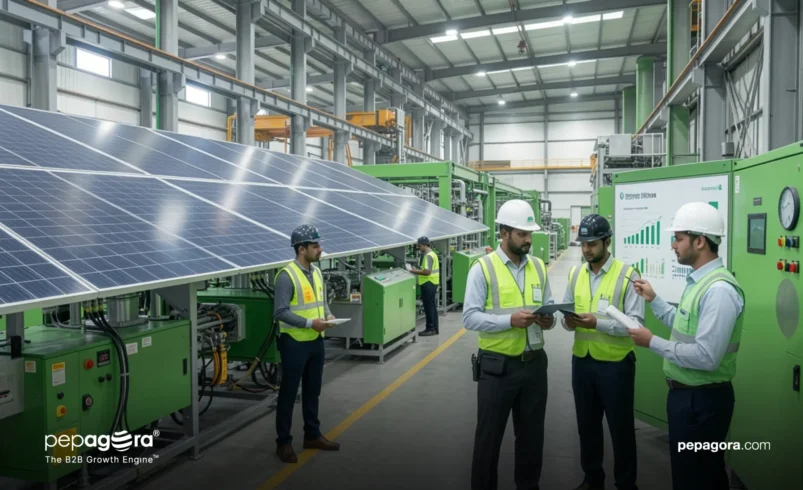

Industry Leaders Discuss the Roadmap for a Low-Carbon Future
India’s journey towards achieving its climate goals requires active participation from industries of all sizes, especially Micro, Small and Medium Enterprises (MSMEs). This was one of the key messages that emerged during Carbon Shift India 2026, a national conference that brought together policymakers, industry leaders, sustainability experts, financial institutions, and businesses to discuss strategies for accelerating industrial decarbonisation.
The event focused on how stronger carbon markets, better financial support, technological innovation, and policy reforms can help industries reduce carbon emissions while maintaining economic growth. Participants emphasized that MSMEs must be included in this transition because they form a significant part of India’s manufacturing ecosystem and contribute substantially to industrial production and employment.
Why Industrial Decarbonisation Matters
Industrial activities account for a considerable share of greenhouse gas emissions. As global markets increasingly prioritize environmentally responsible production, industries are under growing pressure to adopt cleaner technologies and reduce their carbon footprint.
For India, industrial decarbonisation is not only an environmental necessity but also an economic opportunity. Businesses that adopt sustainable manufacturing practices can improve operational efficiency, reduce energy costs, meet international environmental standards, and strengthen their competitiveness in export markets.
However, achieving these goals requires coordinated efforts involving government agencies, financial institutions, technology providers, and businesses of all sizes.
Carbon Markets Can Encourage Cleaner Manufacturing
One of the central themes of the conference was the growing importance of carbon markets.
A carbon market creates financial incentives for businesses to reduce greenhouse gas emissions. Companies that successfully lower their emissions can earn carbon credits, which may be traded or sold to organizations that need to offset their own emissions.
Experts at the event highlighted that well-designed carbon markets can encourage industries to invest in cleaner technologies, improve energy efficiency, and accelerate the transition toward low-carbon manufacturing.
For businesses, particularly those planning long-term investments, predictable carbon market policies can provide greater confidence while encouraging sustainable industrial development.
Why MSMEs Need Special Support
Although large corporations often have the financial resources to invest in green technologies, MSMEs face a different reality.
Many small businesses operate with limited capital and may find it difficult to adopt energy-efficient machinery, renewable energy systems, or advanced manufacturing technologies without external support. High upfront investment costs, limited technical expertise, and restricted access to finance remain significant barriers.
Conference participants stressed that if India wants to achieve meaningful industrial decarbonisation, MSMEs must receive targeted assistance through dedicated financial schemes, technology support, skill development, and easier access to affordable green financing.
Supporting MSMEs during this transition will not only reduce emissions but also strengthen their long-term competitiveness.
Technology and Innovation Will Drive the Transition
Innovation was identified as one of the most important drivers of sustainable industrial growth.
Businesses are increasingly adopting technologies such as energy-efficient manufacturing systems, automation, Artificial Intelligence (AI), digital monitoring tools, smart energy management systems, renewable energy solutions, and advanced recycling techniques to improve environmental performance.
Digital technologies can help businesses monitor energy consumption, identify inefficiencies, reduce waste, and optimize production processes.
Experts noted that wider adoption of these technologies can help industries reduce operating costs while improving productivity and environmental performance simultaneously.
Expanding Access to Green Finance
Access to finance emerged as another important area of discussion.
Transitioning to cleaner production often requires significant investment in equipment upgrades, renewable energy installations, process improvements, and environmental compliance.
Many MSMEs struggle to secure affordable financing for such investments.
Participants recommended expanding green financing options through banks, financial institutions, sustainability-linked loans, blended finance models, and government-supported credit programmes.
Simplifying loan procedures and creating financial incentives for environmentally responsible businesses could encourage more MSMEs to invest in sustainable technologies.
Building Skills for a Green Economy
Industrial decarbonisation is not only about technology—it also requires skilled professionals capable of implementing and managing sustainable business practices.
The conference highlighted the need for workforce training in areas such as energy management, carbon accounting, renewable energy, environmental compliance, sustainable manufacturing, and green business management.
Training entrepreneurs and employees can help businesses better understand carbon reduction strategies while improving their ability to comply with evolving environmental regulations.
Educational institutions, industry associations, and government agencies were encouraged to collaborate in developing specialized training programmes that prepare businesses for the transition to a low-carbon economy.
Strengthening India’s Global Competitiveness
Sustainability is becoming an increasingly important factor in international trade. Many global buyers now expect suppliers to demonstrate responsible environmental practices and lower carbon emissions.
Businesses that adopt cleaner production methods are likely to gain a competitive advantage in export markets by meeting international sustainability standards and customer expectations.
Participants observed that India’s transition toward greener manufacturing can enhance its position as a reliable global manufacturing hub while attracting greater investment and supporting long-term industrial growth.
By helping MSMEs become environmentally responsible, India can strengthen both its domestic industries and its export competitiveness.
Looking Ahead
The discussions at Carbon Shift India 2026 highlighted that industrial decarbonisation should be viewed not merely as an environmental obligation but as a strategic opportunity for economic growth and industrial modernization.
A successful transition will require strong carbon markets, supportive government policies, accessible green finance, technological innovation, skill development, and active participation from businesses of every size. MSMEs, which form the backbone of India’s industrial sector, must remain at the centre of these efforts.
With the right ecosystem in place, small businesses can successfully adopt cleaner technologies, improve operational efficiency, reduce long-term costs, and access new opportunities in both domestic and international markets. As India advances toward its climate commitments and sustainable development goals, empowering MSMEs to embrace green manufacturing will be essential for building a resilient, competitive, and future-ready industrial economy.
FAQs: Carbon Shift India 2026 Highlights the Need for Stronger Carbon Markets and MSME Support
Carbon Shift India 2026 highlights the importance of industrial decarbonisation, carbon markets, green finance, and technology adoption to help businesses reduce emissions while supporting sustainable economic growth.
MSMEs play a major role in India's manufacturing ecosystem. Supporting MSMEs with green technologies, financial assistance, and skill development can help reduce industrial emissions and create more sustainable businesses.
Carbon markets create financial incentives for companies to lower greenhouse gas emissions. Businesses that reduce emissions can earn carbon credits, encouraging investment in cleaner technologies and sustainable practices.
Many MSMEs face challenges such as high investment costs, limited access to green financing, lack of technical expertise, and difficulties in implementing advanced sustainable manufacturing solutions.
Sustainable manufacturing can help businesses reduce operational costs, improve efficiency, meet international environmental standards, attract global buyers, and strengthen their position in export markets.
