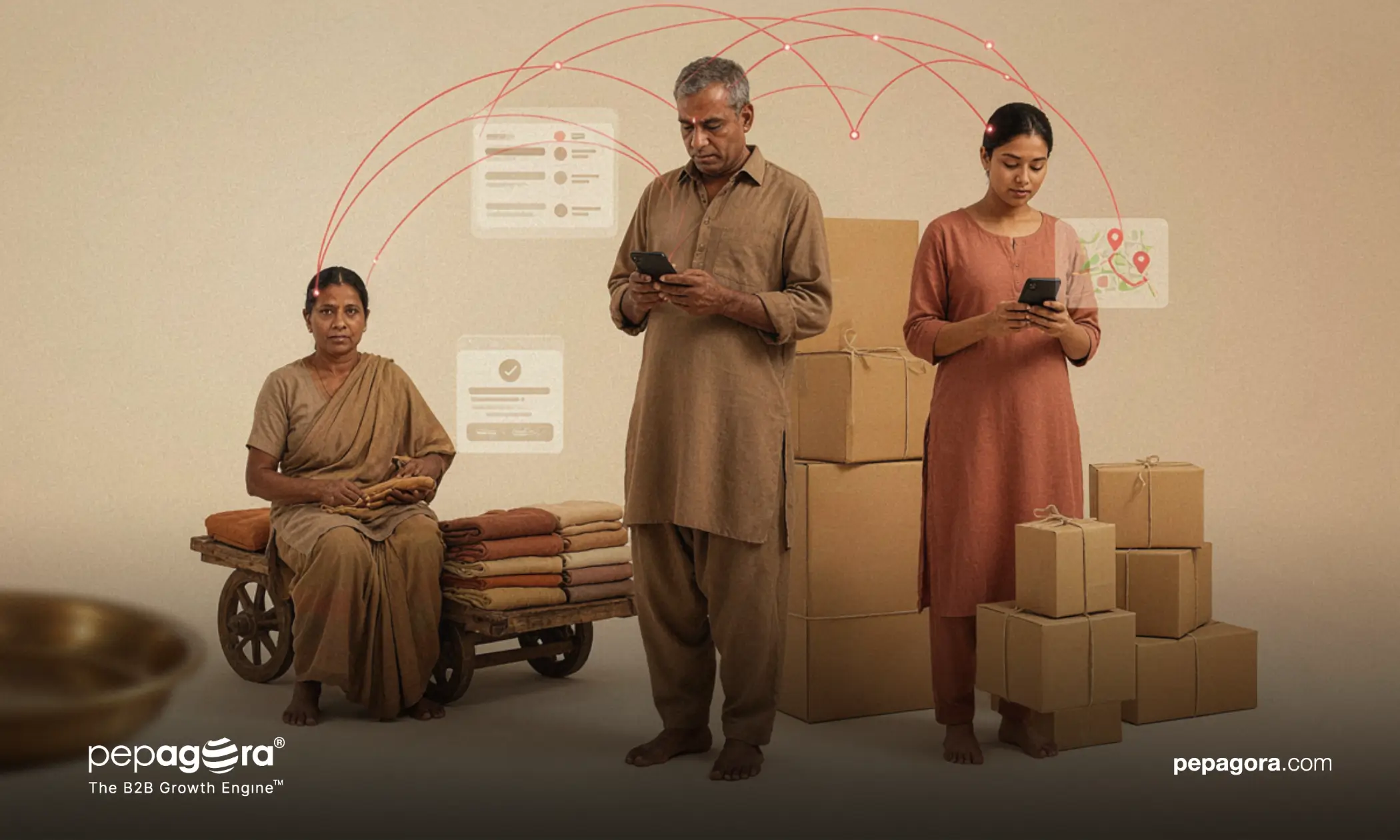
The way businesses evaluate suppliers is changing as digital procurement becomes an increasingly important part of India’s B2B marketplace. For micro, small and medium enterprises (MSMEs), product quality and competitive pricing remain essential, but they are no longer the only factors influencing purchasing decisions. Business credibility, transparent information and a professional digital presence are becoming equally important in establishing supplier relationships.
Traditionally, many small businesses have depended on personal networks, trade fairs, referrals and local industry connections to secure orders. However, as buyers increasingly research suppliers through digital platforms, an enterprise’s online identity can influence whether it is considered for a business opportunity.
This is creating a new dimension of MSME branding, where trust is built not only through established relationships but also through verifiable business information, consistent communication and visible operational credibility.
Digital Procurement Is Changing Supplier Discovery
The growing importance of digital visibility is reflected in the India SME Forum’s Digital Bharat: India Digital Procurement Report 2026, which estimates India’s MSME procurement economy at ₹124.9 lakh crore.
According to the report, 80.4% of surveyed MSMEs expect digital procurement to play a major role in expanding their businesses over the next three years. It also found that 61.7% of respondents already procure at least part of their requirements digitally, indicating a shift towards online supplier discovery and purchasing.
For MSME suppliers, this transition means that buyers may evaluate businesses before making direct contact. A company website, digital product catalogue, business profile, customer reviews and accessible contact information can influence how professionally a supplier is perceived.
The report also identified price transparency and supplier quality as important considerations in digital procurement. These findings underline the growing value of clear product specifications, accurate pricing information and dependable business communication in B2B transactions.
Trust Is Becoming a Business Requirement
In B2B markets, purchasing decisions often involve substantial order values, long-term supply commitments and operational dependencies. Buyers need confidence that a supplier can deliver products as promised, maintain quality standards and provide support when required.
For smaller enterprises competing against established manufacturers, demonstrating credibility can be particularly important.
Business verification, GST details, Udyam registration, quality certifications, product specifications and documented business credentials can help buyers assess a supplier’s legitimacy. Similarly, transparent delivery timelines, clear payment terms and accessible customer support can reduce uncertainty during negotiations.
The Government e-Marketplace (GeM) provides an example of how verification and transparency are becoming embedded in procurement systems. According to a Ministry of Commerce and Industry update published in August 2026, GeM had 11,75,001 registered MSMEs as of July 30, 2026. Procurement from MSMEs through the platform reached ₹2.37 lakh crore in FY 2025–26.
The platform also uses digital verification and analytical systems to identify suspicious procurement patterns and potential irregularities. This reflects the increasing importance of accountability and reliable business information in digital transactions.
Digital Presence Is Extending Beyond Company Websites
An effective digital identity is no longer limited to maintaining a basic website. MSMEs are increasingly expected to provide consistent business information across online marketplaces, professional networking platforms, industry directories and digital catalogues.
For manufacturing and B2B suppliers, this may include detailed product descriptions, technical specifications, manufacturing capabilities, certifications, production capacity and industry applications.
A buyer searching for an industrial component supplier, for example, may compare multiple businesses online before requesting quotations. A supplier with complete product information, clear business credentials and accessible communication channels can make the evaluation process easier.
Government-supported digital initiatives are also encouraging MSME participation in online commerce. Under the MSME Trade Enablement and Marketing (TEAM) initiative, businesses are being supported in onboarding onto the Open Network for Digital Commerce (ONDC).
A Ministry of MSME statement in March 2026 reported that approximately 2.06 lakh merchants had completed at least one transaction on the ONDC Network as of December 31, 2025. It also reported that 3,127 MSMEs had generated more than one lakh transactions through the MSME TEAM Scheme during that financial year.
Transparency Can Strengthen Long-Term Buyer Relationships
Digital visibility may help businesses attract attention, but sustained credibility depends on the consistency of their operations. In B2B markets, discrepancies between advertised capabilities and actual delivery can quickly affect supplier relationships.
Clear quotations, accurate product information, transparent pricing, timely order updates and documented after-sales support can help establish confidence. Similarly, businesses that communicate delays or changes openly may be better positioned to maintain long-term customer relationships.
This is particularly relevant for MSMEs supplying larger manufacturers, distributors and institutional buyers, where procurement decisions often involve compliance checks and supplier performance assessments.
A New Competitive Identity for Indian MSMEs
India’s MSME sector is gradually moving into a more digitally connected business environment. As procurement platforms, online marketplaces and digital business networks expand, the ability to establish credibility online could influence which enterprises gain access to new buyers.
Branding in this environment is not simply about logos, advertisements or promotional campaigns. It increasingly reflects how clearly a business presents its capabilities, verifies its identity and fulfils its commitments.
For Indian MSMEs, the emerging competitive advantage lies in combining product quality with transparent practices and a dependable digital identity. Businesses that make it easier for buyers to discover, evaluate and trust them may be better positioned to secure opportunities across domestic and wider B2B markets.
FAQs About MSME Branding, Trust and Digital Presence
A professional digital presence helps MSMEs showcase their products, business credentials, manufacturing capabilities and contact information. It also makes it easier for potential buyers to discover and evaluate suppliers before starting a business conversation.
MSMEs can build trust by providing accurate business information, GST and Udyam details, relevant certifications, clear product specifications, transparent pricing and consistent communication.
Transparency helps buyers understand product quality, pricing, delivery timelines, payment terms and supplier capabilities. Clear information reduces uncertainty and supports stronger business relationships.
Online B2B marketplaces allow MSMEs to showcase business profiles, product catalogues and company information to a wider audience. They can help businesses connect with potential buyers beyond their local markets.
An MSME should include its company overview, product details, manufacturing capabilities, certifications, business registration information, quality standards, contact details and relevant images. Keeping this information accurate and updated can improve buyer confidence.

About Author
Harsha Varthan
Harsha is a highly respected B2B marketing expert who passionately helps sellers and buyers connect, grow their businesses online, and build strong global visibility. His expertise spans SEO, content marketing, lead generation, marketplace strategy, public relations, and result-driven digital growth planning, making him a trusted voice in the industry.