
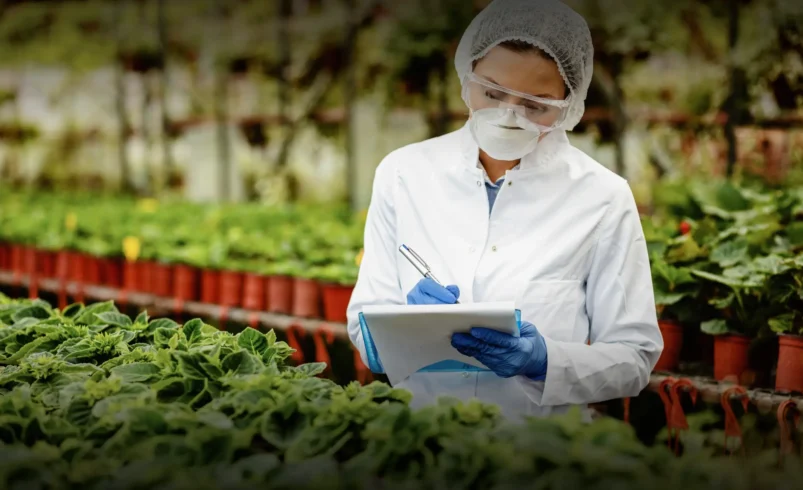

The agriculture industry is the backbone of India’s economy, supporting millions of livelihoods and ensuring food security. With the adoption of modern techniques like drip irrigation, fertigation, and protected cultivation, farming is becoming more efficient and profitable. Crops like cucumber, capsicum, and strawberry are now widely grown under polyhouse conditions, improving yield and quality.
Soil health management, balanced nutrition, and precision farming are key to sustainable growth. The integration of technology and agronomy expertise is transforming traditional farming into a high-value enterprise. The future of agriculture lies in smart, data-driven, and resource-efficient practices.
Market Expansion and Technology Integration
The rapid adoption of agricultural technologies is reshaping global supply chains. In 2024, the global market for food and agriculture technology and products was valued at approximately USD 760.41 million and is projected to grow significantly to USD 1,511.83 million by 2032, expanding at a CAGR of 8.97%. This growth reflects the increasing reliance on innovation to improve productivity, reduce waste, and enhance supply chain transparency.
Core Elements of a Modern Agricultural Supply Chain
A resilient food and agriculture supply chain is built on multiple interconnected components that ensure efficiency from farm to market.
Component | Role | Impact |
Production Systems | Advanced farming techniques | Higher yield and quality |
Storage & Warehousing | Preservation of produce | Reduced post-harvest losses |
Transportation | Efficient logistics | Faster delivery cycles |
Processing | Value addition | Increased market value |
Distribution Networks | Market access | Wider reach and profitability |
Each element contributes to building a system that is not only productive but also sustainable and scalable.
Connecting with Reliable Suppliers
To maintain consistency in supply and quality, businesses must collaborate with trusted Food and Agriculture Product Suppliers. These suppliers play a vital role in ensuring access to quality inputs, advanced tools, and reliable distribution channels, helping businesses maintain operational efficiency across the value chain.
Leveraging Digital Marketplaces for Growth
The rise of digital platforms has significantly improved how agricultural businesses operate and connect. Using a B2B online marketplace allows buyers and sellers to interact seamlessly, compare products, and streamline procurement processes. This digital shift is enabling faster decision-making and improving overall supply chain transparency.
Strengthening Supply Chains Through Sustainability
Sustainability is no longer optional in agriculture; it is a necessity for long-term growth. Businesses are increasingly adopting practices that reduce environmental impact while maintaining productivity. Exploring frameworks like Sustainable Food and Agriculture Practices to Watch in 2026 helps organizations align their operations with future-ready strategies and evolving market expectations.
Strategic Approaches for Efficient Supply Chains
To build a robust agricultural supply chain, organizations should focus on the following strategies:
- Technology Adoption – Integrate smart farming and monitoring tools
- Resource Optimization – Use water, soil, and inputs efficiently
- Supply Chain Digitization – Enhance visibility and traceability
- Partnership Development – Collaborate with reliable stakeholders
- Market Diversification – Expand into new and emerging markets
These approaches help businesses adapt to changing demands while maintaining operational stability.
Business Value of Modern Supply Chain Systems
Efficient supply chains not only improve productivity but also enhance profitability and resilience. Reduced waste, improved quality, and faster market access contribute to stronger business performance. Companies that invest in modern strategies are better positioned to handle uncertainties and capitalize on new opportunities.
As agriculture continues to evolve, the focus is shifting towards systems that combine technology, sustainability, and efficiency. Organizations that embrace these changes are not just improving operations but also shaping the future of the food ecosystem.
FAQs
It is the network that connects production, processing, storage, and distribution of agricultural products.
It improves efficiency, reduces waste, and enhances productivity.
They simplify procurement, improve connectivity, and provide access to wider markets.
Methods that maintain productivity while minimizing environmental impact.
By adopting technology, optimizing resources, and building strong partnerships.

His contributions focus on improving yield, crop quality, and cost-efficiency through field-based agronomy solutions, offering actionable insights that support sustainable and productive farming practices.