
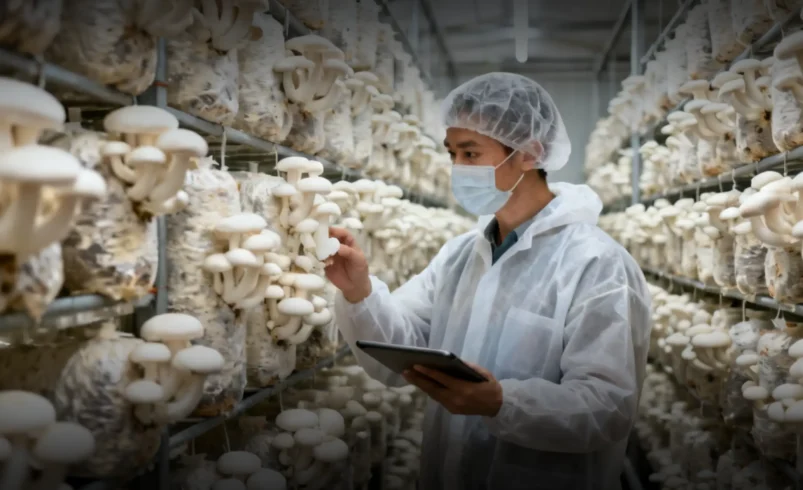

Mushroom cultivation has emerged as one of the most promising agribusiness opportunities in India and worldwide. Unlike traditional crops, mushrooms require controlled environments, precise composting, and strict hygiene protocols.
With rising demand for nutritious, sustainable, and protein-rich foods, modern mushroom farming is increasingly being adopted by growers who seek consistent yields and profitable returns.
India’s diverse climate and growing expertise in controlled farming systems make it a strong player in this sector. Entrepreneurs, exporters, and sourcing companies are now exploring mushrooms as part of the broader food and agricultural industry, leveraging technology-driven methods and digital platforms to reach global buyers.
India’s Strength in Mushroom Production
India has long been recognized for its agricultural diversity, and mushroom farming is steadily gaining ground. The country produces several varieties including button mushrooms, oyster mushrooms, and milky mushrooms, each requiring specific climate and composting techniques.
With the adoption of phase-wise composting, automated climate control, and vertical farming systems, growers are able to achieve higher yields and reduce contamination risks. Reliable vertical farming equipment suppliers are helping farmers set up scalable infrastructure that supports year-round production.
For buyers searching online for mushroom suppliers India or food exporters India, consistent quality and bulk supply remain the top priorities. Indian producers are increasingly meeting these expectations by combining traditional expertise with modern farming innovations.
Growing Global Demand for Mushrooms
Global demand for mushrooms is rising due to their nutritional value, versatility in cuisines, and role in sustainable diets. According to Coherent Market Insights, the market’s projected value is USD 80.71 billion in 2026, expected to reach USD 159.29 billion by 2033 at a 10.2% CAGR
Key drivers of demand include:
- Rising population and urbanization
- Increased focus on healthy, low-fat diets
- Expansion of food processing industries
- Growing popularity of ethnic and fusion cuisines
International buyers frequently search for mushroom exporters India, organic mushroom suppliers, and bulk food suppliers to meet this demand. Indian growers benefit from competitive pricing and expanding production capacity.
Technology-Driven Farming Methods
Modern mushroom farming is no longer limited to small-scale manual operations. Today, technology driven farming methods such as automated humidity control, CO₂ monitoring, and mechanized composting are transforming the industry.
These innovations reduce labor costs, improve consistency, and allow farmers to scale production efficiently. By integrating smart sensors and climate management systems, growers can maintain optimal conditions for mushroom growth, ensuring uniform quality across batches.
For businesses, adopting these methods not only improves yields but also enhances credibility among buyers who prioritize suppliers with advanced farming practices, which continue to shape modern agriculture.
Importance of Quality Standards and Certifications
Mushrooms, being highly perishable, require strict quality control and compliance with food safety standards.
Exporters and suppliers must adhere to:
- Hygiene compliance standards
- Quality testing and inspection
- Organic certification programs
- Export documentation requirements
Buyers searching for mushroom exporters India or food manufacturers who demonstrate strong quality assurance practices. Maintaining consistent product quality is essential for building long-term buyer relationships and accessing premium markets in Europe, North America, and the Middle East.
Role of Digital B2B Platforms
Traditionally, mushroom sourcing relied on local markets and trade fairs. Today, digital platforms are reshaping the way buyers and suppliers connect.
Through a Global B2B Marketplace, buyers can explore supplier catalogs, compare product ranges, and connect directly with manufacturers. For mushroom producers, maintaining an online presence with clear product information and certifications helps generate more inquiries from international buyers.
Digital visibility is now a critical factor in expanding market reach and building trust with global partners.
Challenges in Mushroom Farming
Despite strong demand, mushroom farming faces several challenges:
- Supply chain and storage issues: Mushrooms require cold storage and efficient logistics to maintain freshness.
- Price volatility: Market prices fluctuate due to seasonal demand and supply disruptions.
- Export regulations: Compliance with international food safety standards is mandatory.
- Contamination risks: Poor hygiene or improper composting can lead to crop losses.
Businesses that invest in proper infrastructure, packaging, and training are better positioned to overcome these challenges and succeed in the sector.
Practical Tips for Mushroom Growers
Entrepreneurs and companies can strengthen their mushroom farming operations through several strategies:
- Maintain consistent product quality to build buyer trust.
- Invest in packaging and storage to extend shelf life and protect products during transportation.
- Expand product range by offering fresh, dried, and processed mushroom products.
- Improve digital visibility with searchable profiles and certifications to attract global buyers.
Future Outlook
The mushroom industry is expected to grow rapidly as global consumers embrace sustainable and plant-based diets.
Trends shaping the future include:
- Increasing demand for organic mushrooms
- Growth of processed mushroom products such as powders and snacks
- Expansion of global agricultural trade
- Wider adoption of vertical farming and smart technologies
India’s strong agricultural base, combined with modern mushroom farming practices, positions it well to capture a larger share of the expanding global food trade. Businesses that focus on quality production, efficient supply chains, and strong digital visibility will thrive in this evolving market.
FAQs
Mushroom cultivation offers high market demand, faster crop cycles, and the ability to grow in controlled environments, making it a profitable opportunity for growers and exporters.
India commonly produces button mushrooms, oyster mushrooms, and milky mushrooms, each suited to different climate and composting conditions.
Modern farming technologies such as automated humidity control, CO₂ monitoring, mechanized composting, and vertical farming systems help improve yields, reduce contamination, and ensure consistent quality.
Key challenges include storage and logistics issues, contamination risks, fluctuating prices, and meeting international export regulations.
Pepagora helps mushroom suppliers connect with global buyers, showcase their products, enhance digital visibility, and generate inquiries.

Irfan focuses on optimizing yield while maintaining consistency and sustainability in farming operations. With a strong emphasis on practical implementation and continuous improvement, he aims to support readers in understanding modern mushroom farming techniques and solutions through well-structured and informative content.