
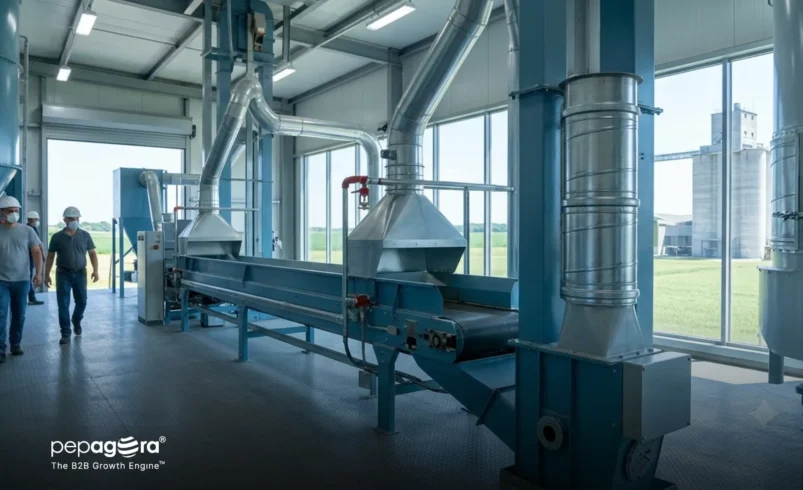

Grain handling facilities are essential to agricultural processing, storage, and distribution. However, activities such as grain unloading, conveying, milling, and storage can generate combustible dust. When fine dust particles accumulate or become suspended in the air and encounter an ignition source, they can create serious fire and explosion hazards.
Dust explosion prevention is therefore an important consideration for grain elevators, flour mills, feed mills, silos, and food processing facilities. Businesses need effective dust management practices, suitable industrial safety equipment, and regular machinery inspections to reduce operational risks.
Understanding Combustible Dust Hazards in Grain Processing
Grain dust can originate from several stages of material handling. Receiving operations, conveyor transfers, bucket elevators, grinding machines, and storage systems can release fine particles into the surrounding environment.
Common risk areas include:
- Grain receiving and unloading points.
- Conveyor belts and material transfer systems.
- Bucket elevators and grain storage silos.
- Milling and grinding equipment.
- Dust collection and filtration systems.
- Grain drying and processing operations.
According to the OSHA Grain Handling Safety Guidelines, combustible grain dust and ignition sources must be controlled to reduce fire and explosion risks.
Dust Explosion Prevention in Grain Handling Facilities
Combustible dust risk cannot be managed by a single safeguard. Effective prevention requires multiple layers of protection across the entire process, from grain intake and conveying to bucket elevators, silos, dust collectors and milling equipment.
Three fundamentals remain critical:
Prevent the formation and accumulation of combustible dust
Eliminate potential ignition sources
Limit the consequences if a deflagration occurs
Key safeguards include effective dust aspiration, explosion-protected dust collectors, rotary airlocks, explosion venting and isolation, belt speed and alignment monitoring, blockage detection, bearing temperature monitoring, grounding and bonding, magnetic separation, and robust housekeeping.
The goal is simple: control the dust, control the ignition sources, and prevent an initial event from escalating into a major explosion.
Prevent Dust. Protect People. Keep Grain Moving.
Importance of Industrial Safety Equipment
Industrial safety equipment helps facilities monitor operating conditions, control workplace hazards, and protect employees and machinery.
Important equipment and systems include:
1. Dust Collection Systems: Industrial dust collectors and aspiration systems help capture airborne particles at grain transfer points and processing equipment.
2. Explosion Protection Systems: Properly engineered explosion venting, suppression, and isolation systems help limit the consequences of a deflagration.
3. Monitoring Devices: Belt speed sensors, alignment monitors, and bearing temperature monitoring systems help identify abnormal operating conditions.
4. Fire Detection Equipment: Suitable detection and alarm systems help facilities respond to potential fire incidents.
5. Grounding and Bonding Equipment: Appropriate electrical grounding and bonding arrangements help manage static electricity risks.
Businesses looking for relevant products can refer to Pepagora’s Industrial Safety Equipment category to identify industrial safety products and supplier offerings.
Industrial Safety Standards and Compliance
Following recognized safety standards helps organizations establish appropriate combustible dust management practices.
The OSHA Grain Handling Facilities Standard, 29 CFR 1910.272, addresses housekeeping, employee training, preventive maintenance, dust collection, and other grain facility safety requirements in the United States.
The NFPA 660 Standard for Combustible Dusts and Particulate Solids provides a consolidated framework for combustible dust safety.
Facilities should evaluate applicable local regulations and obtain qualified engineering guidance when selecting protection systems.

Frequently Asked Questions
Combustible grain dust can create an explosion hazard when fine particles become airborne or accumulate and encounter an ignition source. Overheated bearings, friction, electrical faults, and hot work can contribute to ignition risks.
Facilities should implement effective dust collection, regular housekeeping, preventive maintenance, ignition source control, equipment monitoring, employee training, and appropriately designed explosion protection systems.
Depending on the facility's hazard assessment, important equipment may include industrial dust collectors, explosion venting systems, explosion isolation devices, temperature sensors, belt alignment monitors, fire detection systems, and grounding arrangements.
