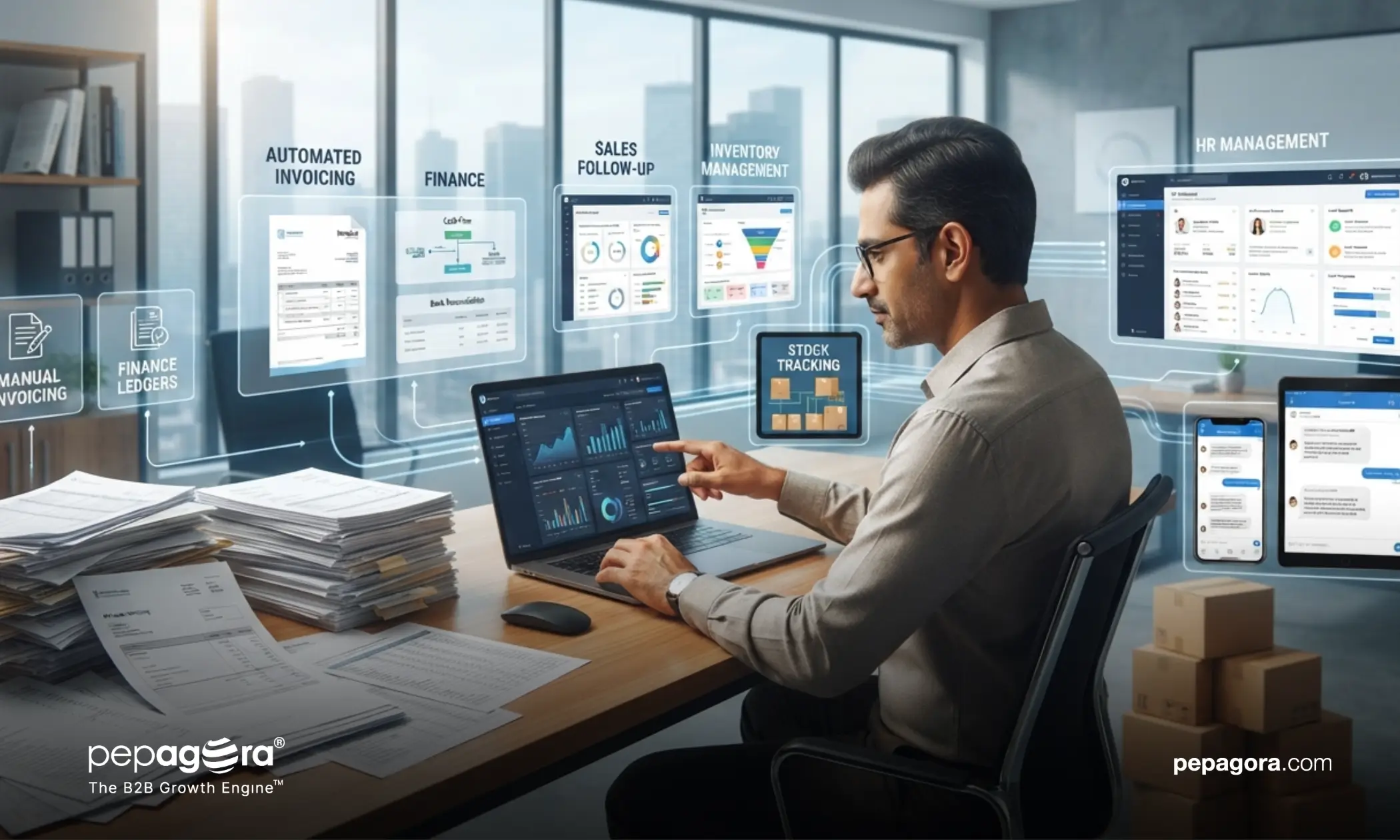

AI is increasingly being used in business processes on a day-to-day basis. The uses of AI among MSMEs include content creation, customer service, data analysis, sales, marketing, forecasting and administration.
However, simply buying an AI system does not make a firm AI-ready. This is because employees must be aware of the capabilities and limitations of the technology as well as the right ways to utilize it. According to research by OECD, skills deficiency is a critical challenge in the implementation of AI technology and educated staff members will report positive experiences with the technology.
Thus, AI literacy for MSMEs is an essential aspect of digitalization.
What is AI Literacy in the Workplace?
AI literacy does not imply that all employees must be programmers and data scientists.
To most employees, AI literacy implies the ability to:
- Have some understanding of how AI tools operate
- Provide clear and effective instruction or prompts
- Validate any information generated by the AI
- Be aware of any limitations, errors, and bias
- Ensure confidentiality of business information
- Know when human expertise is required
The OECD states that for most employees, general AI literacy skills are required as opposed to specific AI skills. Digital skills, analysis of data, problem solving, and creativity will also be required along with AI skills.
Why MSMEs Need to Train Employees Alongside AI
Technology Is Only as Good as the People Who Use It
Although an AI application is capable of generating reports, analyzing customer information, or creating marketing material, there is still a need for employees to be able to use these functions.
Otherwise, companies may find themselves spending a lot of money on technologies that will either be underutilized or used incorrectly. The training of employees ensures that the technology is actually put to good use.
Employees Have to Know the Limits of AI
Artificial Intelligence is capable of providing wrong, outdated, or inaccurate information. Employees who believe everything provided by the AI application will only lead to mistakes in customer communication, report generation, financial planning, or even business processes.
Therefore, the proper training of employees is required.
Training Can Minimize Security and Data Risks
The worker could unknowingly provide confidential information to the AI system without realizing how the data will be treated.
There is need to have AI training that would teach basic data protection techniques, such as what information should be provided to the AI tool, the approved tools and the time sensitive information should never be entered.
This is more relevant as companies start incorporating several AI tools into their various departments.
AI Can Assist With Skill Gap Filling
While AI is basically technology for automation, it also assists companies to counteract some of the skill gaps.
According to the research conducted by OECD, generative AI can help in dealing with skill gaps in SMEs, but efficient use is still dependent on the employee acquiring additional skills.
In an MSME that does not have many workers, training the employees in using the AI technology can allow them to do more work without immediately hiring new people.
What Should an MSME AI Training Programme Cover?
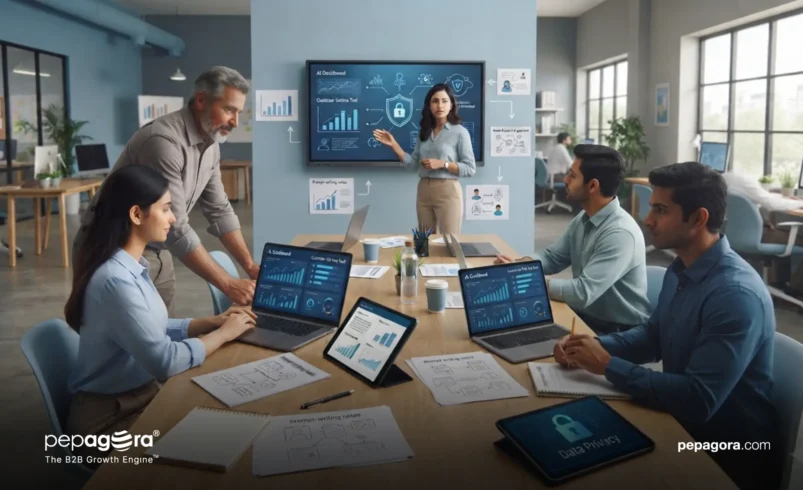
Training in AI need not necessarily be cost-intensive and complex. The organizations may start with simple and role-based training.
Some elements which may be included in this are:
- Basics of AI: What is AI and its use in common business tools
- Application: Its application in particular roles of the employees
- Prompting: Giving relevant instructions and context
- Output: How to recognize error or unreliable information
- Data privacy: Keeping data of the business and customers confidential
- Proper use: Being aware of biases, transparency and human oversight
- Integration of AI: Recognizing those tasks where the use of AI will really help to save time
It is interesting to note that a study by OECD revealed that only 23.6% of SMEs using AI technology had their employees undergo AI training.
Start Small and Build AI Skills Gradually
Training on all forms of AI technologies is not necessary for MSMEs.
This can be replaced by pinpointing recurring tasks where the use of AI can add value or where it is currently being used. The workforce can then be trained on these tasks.
The firm can start training its employees from the marketing department, customer services, accounting, sales, or administration.
It would be wise to conduct periodic refresher training as technology continues to evolve.
AI implementation must be seen as a people and technology transition process, and not only an investment in software.
AI literacy for employees in MSMEs may facilitate technology adoption, avoid unnecessary errors, increase data literacy, and empower teams to adopt AI more effectively. Recent literature increasingly identifies training as one of the key aspects that enable translating AI adoption into productivity benefits.
It is the companies that train their employees along with implementing the technology that will be able to make AI work effectively in practice.
FAQs About AI Literacy for MSMEs
AI literacy for MSMEs means understanding how AI tools work, using clear prompts, checking AI-generated information, and knowing when human judgment is required.
MSMEs should train employees so they can use AI tools correctly, reduce errors, protect business data, improve productivity, and make better use of technology investments.
An AI training programme should cover AI basics, prompting, output verification, data privacy, bias awareness, human oversight, and the practical use of AI in specific job roles.
AI training helps employees identify inaccurate information, avoid sharing confidential data, use approved AI tools, and understand the limitations of AI-generated results.
MSMEs can begin with short, role-based training focused on recurring tasks in marketing, sales, customer service, accounting, HR, or administration. Refresher sessions can be added as AI tools develop.