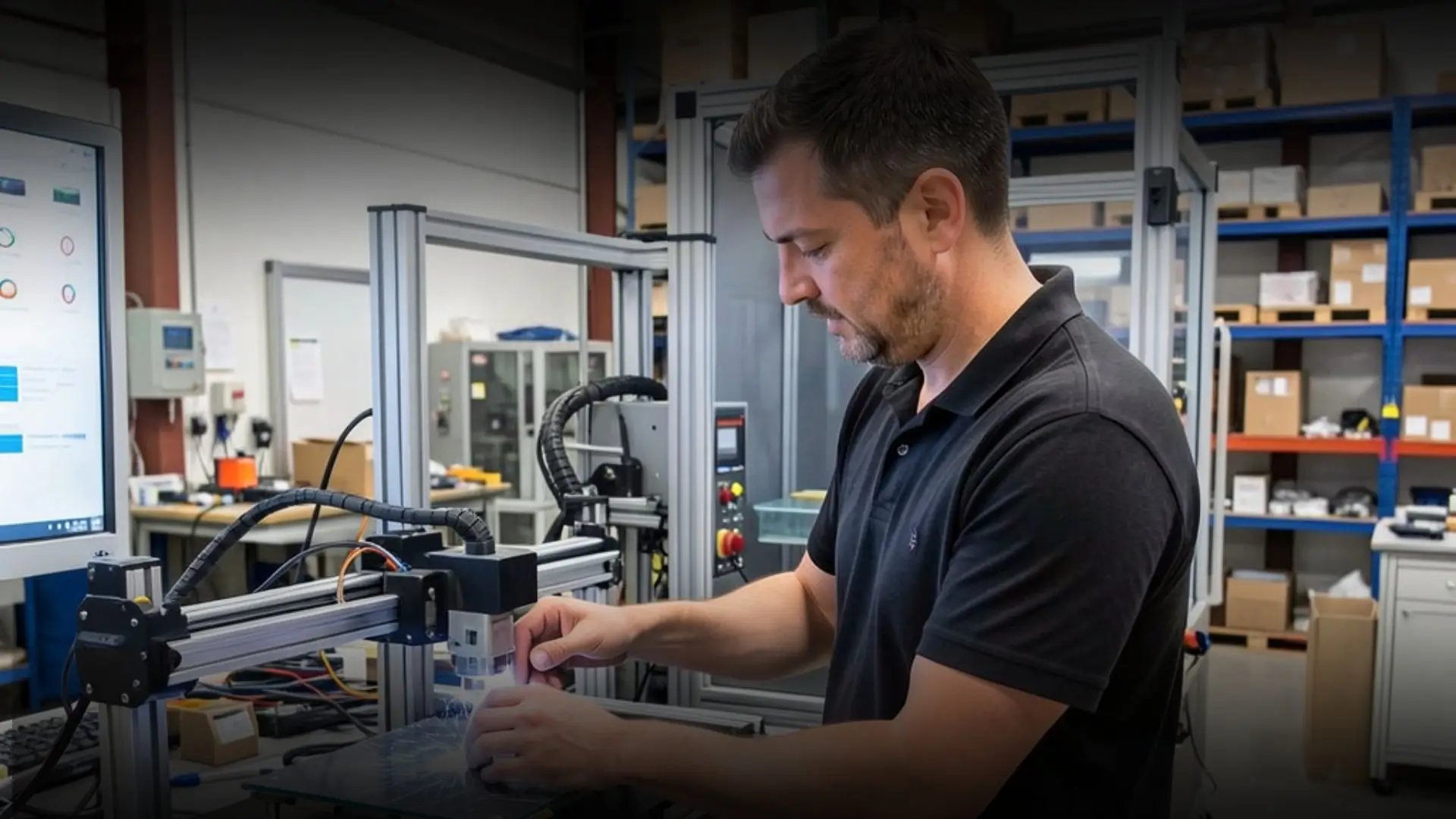


Industrial manufacturing is evolving as businesses adopt advanced technologies to improve production efficiency, product quality, and design flexibility. Among these developments, industrial 3D printing solutions are creating new opportunities for manufacturers to develop products, produce customized components, and improve manufacturing processes.
Also known as additive manufacturing, 3D printing creates physical objects by building material layer by layer using digital designs. This technology supports applications ranging from rapid prototyping to functional component production across automotive, aerospace, healthcare, electronics, and engineering industries.
In 2026, manufacturers are increasingly evaluating 3D printing technologies to meet changing production requirements, reduce product development time, and manufacture complex designs.
What Are Advanced Industrial 3D Printing Solutions?
Industrial 3D printing solutions involve specialized equipment, materials, and manufacturing technologies used to produce prototypes, functional parts, and customized components.
Unlike traditional manufacturing methods, additive manufacturing builds components directly from digital models. This approach provides greater design flexibility and can reduce the need for certain tooling processes.
Common industrial applications include:
- Rapid prototyping and product development
- Customized machine components
- Engineering models and functional prototypes
- Complex industrial component manufacturing
- Product testing and design validation
- Low-volume and specialized production
The choice of technology depends on the component design, material requirements, production quantity, and expected performance.
Major 3D Printing Technologies Used in Manufacturing
Different additive manufacturing technologies support different industrial requirements. Understanding their capabilities helps businesses select suitable equipment and production methods.
1. Fused Deposition Modeling (FDM)
FDM uses thermoplastic filaments to build components layer by layer. It is commonly used for functional prototypes, engineering models, industrial fixtures, and product development.
2. Stereolithography (SLA)
SLA uses light to cure liquid resin into solid components. It is suitable for applications requiring fine details, dimensional accuracy, and smooth surface finishes.
3. Selective Laser Sintering (SLS)
SLS uses laser energy to fuse powdered materials into solid parts. It supports complex geometries and functional components for industrial applications.
4. Multi Jet Fusion (MJF)
MJF is a powder-based additive manufacturing technology used to produce detailed and functional components. It supports applications requiring consistent part quality and design flexibility.
5. Digital Light Processing (DLP)
DLP uses projected light to cure liquid resin. It is suitable for producing detailed components with accurate dimensions and fine features.
6. Metal 3D Printing (DMLS/SLM)
Metal additive manufacturing uses controlled energy sources to fuse metal powders into solid components. These processes support applications requiring strength, durability, and complex metal geometries.
Benefits of 3D Printing for Industrial Manufacturing
The adoption of additive manufacturing offers several advantages for businesses looking to improve their product development and manufacturing operations.
Faster Product Development: Manufacturers can create prototypes and evaluate product designs before investing in full-scale production.
Design Flexibility: Complex geometries and customized components can be developed using digital design files.
Material Optimization: Additive manufacturing can reduce unnecessary material removal compared with certain conventional manufacturing processes.
Customization: Businesses can produce application-specific components based on engineering and customer requirements.
Reduced Tooling Requirements: Some applications can be manufactured without traditional moulds and specialized tooling.
These benefits make industrial 3D printing a useful option for businesses evaluating alternative manufacturing methods.
How to Choose the Right 3D Printing Equipment
Selecting suitable 3D printing equipment requires careful evaluation of technical specifications and production requirements.
Before purchasing a machine, manufacturers should consider:
- Printing Technology: Identify whether FDM, SLA, SLS, MJF, DLP, or metal printing is suitable for the application.
- Material Compatibility: Check the supported plastics, resins, engineering polymers, or metal materials.
- Build Volume: Ensure the machine can accommodate the required component dimensions.
- Printing Accuracy: Compare dimensional tolerances and surface finish requirements.
- Production Capacity: Evaluate printing speed and expected output.
- Operating Costs: Consider material consumption, maintenance, electricity, and post-processing.
- Technical Support: Review installation, training, spare parts, and after-sales service.
Comparing these factors helps businesses identify equipment that matches their manufacturing objectives.
Industrial Applications of 3D Printing in 2026
Industrial 3D printing is supporting product development and specialized manufacturing across several sectors.
- Automotive: Prototypes, customized components, tooling, and engineering parts.
- Aerospace: Lightweight structures and complex components for specialized applications.
- Healthcare: Customized models, medical prototypes, and application-specific components.
- Electronics: Product enclosures, prototypes, and specialized component development.
- Industrial Engineering: Machine components, fixtures, functional prototypes, and customized parts.
As material options and printing technologies develop, manufacturers can evaluate more applications for additive manufacturing.
Finding 3D Printing Equipment and Suppliers in India
Businesses searching for industrial 3D printing equipment need to compare different technologies, product specifications, material options, and supplier capabilities before making purchasing decisions.
Pepagora provides a dedicated category for buyers looking for 3D Printing Equipment for Industry.
Manufacturers and procurement teams can refer to this category to identify relevant equipment and supplier offerings. Buyers should clearly communicate their preferred printing technology, material requirements, component dimensions, production quantity, and intended application when requesting quotations.
Comparing available options helps businesses identify suitable equipment for their operational requirements.
Driving Industrial Innovation Through Advanced 3D Printing Solutions
Advanced 3D printing and additive manufacturing solutions are helping businesses accelerate product development and streamline manufacturing processes. From rapid prototyping and functional components to customized industrial applications, these technologies offer reliable, precision-driven solutions Offering technologies such as FDM, SLA, SLS, MJF, DLP, and metal 3D printing (DMLS/SLM). Through a wide range of 3D printing technologies and materials, Vexma Technologies helps industries reduce development time, optimize costs, and bring innovative product designs to life. Explore our Industrial 3D Printing Solutions to learn more.
The Future of Industrial 3D Printing
The future of additive manufacturing will be influenced by developments in printing technology, material science, automation, and digital engineering.
In 2026, manufacturers are evaluating how advanced 3D printing can support customized production, complex component development, and more flexible manufacturing operations.
Selecting the right equipment and technology requires businesses to understand their production needs, material specifications, component performance, and long-term operating costs.
With the right approach, industrial 3D printing can become an important part of modern product development and manufacturing strategies.
Frequently Asked Questions
Industrial 3D printing solutions are used for rapid prototyping, customized components, functional parts, engineering models, product testing, and specialized manufacturing applications.
Common technologies include FDM, SLA, SLS, MJF, DLP, and metal 3D printing processes such as DMLS and SLM. The appropriate technology depends on material requirements, component design, and production objectives.
Businesses can compare equipment and supplier offerings through Pepagora's 3D Printing Equipment for Industry category to identify relevant solutions for their manufacturing requirements.

About Author
Harsha Varthan
Harsha is a highly respected B2B marketing expert who passionately helps sellers and buyers connect, grow their businesses online, and build strong global visibility. His expertise spans SEO, content marketing, lead generation, marketplace strategy, public relations, and result-driven digital growth planning, making him a trusted voice in the industry.