
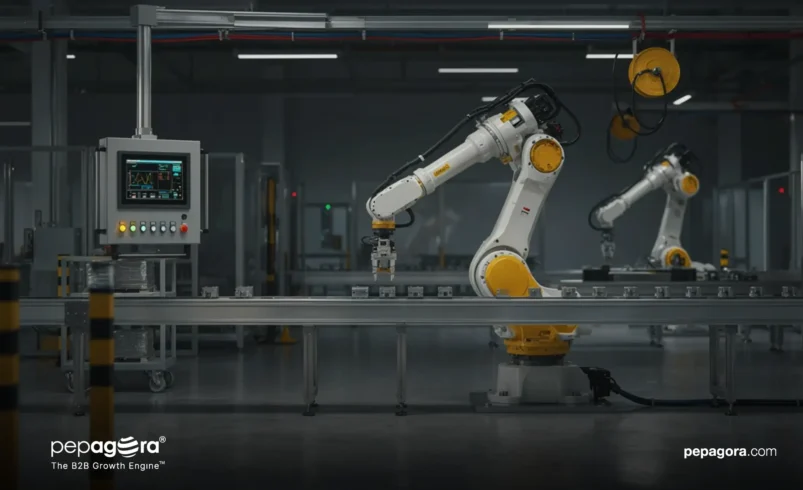

Automation equipment and robotics are transforming how industries manufacture products, manage materials, and perform repetitive or precision-based tasks. From automotive assembly lines and electronics production to packaging, warehousing, and food processing, automated technologies help businesses improve consistency, increase productivity, and optimise resource utilisation. As competition grows and customer expectations evolve, companies are increasingly exploring robotics to build more efficient and flexible operations.
However, successful automation requires more than installing a robot or purchasing advanced machinery. Businesses must identify suitable applications, evaluate equipment capabilities, plan system integration, and ensure that employees can operate and maintain the technology safely. Understanding the roles of Industrial Robot Manufacturers, Robotics Suppliers, and automation specialists can help businesses make informed investment decisions.
Industrial automation equipment includes machines, sensors, controllers, conveyors, programmable logic controllers (PLCs), vision systems, and other technologies that perform or regulate industrial operations. Robotics is a specialised part of automation that uses programmable machines to carry out tasks with varying degrees of movement, precision, and autonomy.
Industrial robots are commonly used for welding, painting, material handling, assembly, palletising, machine tending, and inspection. Depending on the application, businesses may use articulated robots, Cartesian robots, SCARA robots, or collaborative robots.
Each type offers different advantages. Articulated robots provide flexibility across multiple axes, while Cartesian robots are useful for applications requiring linear movement. SCARA robots are frequently used for high-speed assembly and pick-and-place operations. Collaborative robots are designed to support certain forms of human-robot interaction, subject to application-specific risk assessment and safety measures.
Choosing the right technology begins with understanding the task, production environment, required precision, operating speed, and expected workload.
Key Benefits of Industrial Robotics and Automation
● Higher productivity
Robots can perform repetitive tasks consistently and operate for extended periods when properly configured and maintained. This can help manufacturers increase output, reduce bottlenecks, and improve production scheduling.
● Improved precision and repeatability
Automated equipment follows programmed movements and operating parameters. In applications such as component assembly, welding, and material placement, this repeatability can help reduce production variation and improve product consistency.
● Better workplace safety
Robots can take over selected tasks involving heavy lifting, high temperatures, hazardous materials, or repetitive physical movements. However, robotic systems introduce their own risks and require appropriate guarding, safety-rated controls, emergency stops, and application-specific risk assessments.
● Reduced material waste
Accurate dispensing, cutting, welding, and assembly can reduce errors and material losses. When combined with inspection systems, automation can also identify defects earlier in the production process.
● Greater operational flexibility
Programmable equipment can support changes in production requirements. With suitable tooling and configuration, some robotic systems can handle different products or tasks without requiring an entirely new production line.
How to Choose Reliable Industrial Robot Manufacturers
Industrial Robot Manufacturers provide robotic equipment designed for different industries, applications, payloads, and operating conditions. Selecting the right manufacturer involves evaluating more than the robot’s purchase price or maximum speed.
Start by assessing the robot’s payload capacity, reach, number of axes, repeatability, cycle time, and mounting requirements. Payload calculations should include the end-of-arm tooling and the workpiece, not just the object being handled.
The operating environment also matters. Facilities involving dust, moisture, high temperatures, or corrosive substances may require specialised equipment and suitable protection ratings.
Buyers should review technical documentation, warranty coverage, programming support, spare-parts availability, and maintenance requirements. Access to replacement components and qualified service professionals can significantly affect long-term operating costs.
It is also useful to examine the manufacturer’s training resources and compatibility with existing production systems. A robot that meets the immediate task requirements but is difficult to integrate or maintain may not provide the expected return on investment.
The Role of Robotics Suppliers and Automation Equipment Distributors
Robotics Suppliers help businesses identify and procure robotic systems, accessories, controllers, end effectors, and related components. Their guidance can be particularly valuable when buyers are comparing technologies for a specific production application.
Automation Equipment Distributors provide access to a broader range of industrial products, including sensors, conveyors, control panels, machine vision equipment, drives, safety components, and robotic accessories. Coordinated procurement can simplify project planning and help ensure that compatible components are available when needed.
Before selecting a supplier, businesses should verify product specifications, authenticity, delivery timelines, warranty terms, and technical support. Buyers should also clarify whether installation, commissioning, operator training, and maintenance services are included or need to be arranged separately.
For large projects, preparing a detailed equipment list and defining technical requirements early can help avoid incompatible components, procurement delays, and unexpected expenses.
Selecting the Right Robotic Arm for Industrial Applications
Robotic arms are widely used because they can perform controlled movements across a defined working area. However, the right model depends on the task, workpiece, available space, and production conditions.
Robotic Arm Dealers can help buyers compare models based on payload, reach, repeatability, speed, mounting position, and controller capabilities. The end effector is equally important because it determines how the robot interacts with the workpiece.
Grippers may be suitable for handling solid components, while vacuum-based tools can work well with certain flat or lightweight materials. Welding torches, dispensing tools, and specialised inspection devices serve other applications.
Businesses should consider cycle time, tool-changing requirements, cable routing, and access to maintenance points. They should also evaluate how the robotic arm will interact with operators, surrounding machinery, conveyors, and safety systems.
For collaborative applications, buyers should not assume that a robot is automatically safe to operate without guarding. The complete application, including tools, workpieces, movement speeds, and potential contact hazards, must be assessed by qualified professionals.
Why Robotic Automation System Integrators Matter
Robotic Automation System Integrators bring together robots, tooling, sensors, controllers, conveyors, safety equipment, and production software to create a functioning automation solution.
Their responsibilities may include application design, robot programming, electrical engineering, machine vision configuration, communication setup, safety validation, commissioning, and employee training.
Integration is especially important when a robot must work with existing machinery or coordinate several production stages. For example, a robotic machine-tending system may need to communicate with a CNC machine, identify machine status, load and unload components, and respond appropriately when a process stops.
Before starting a project, businesses should establish clear objectives, including target production rates, acceptable defect levels, required cycle times, and expected reductions in manual handling. Integrators can then assess feasibility and recommend an appropriate system configuration.
Project proposals should specify installation responsibilities, testing procedures, documentation, training, and after-sales support. Businesses should also confirm that the completed system meets applicable safety requirements before production begins.
Emerging Trends in Industrial Robotics
Industrial robotics is advancing through improvements in artificial intelligence, machine vision, sensors, connectivity, and motion control.
Machine vision enables robots to identify objects, inspect products, and adjust movements based on visual information. This is particularly useful when components are not consistently positioned or when automated inspection is required.
Collaborative robots are expanding automation options for some smaller production environments, especially where flexibility and simpler redeployment are valuable. Autonomous mobile robots are also being used in selected facilities to transport materials between workstations and storage areas.
Digital twins and simulation tools allow businesses to test robot movements, evaluate layouts, and identify potential collisions before physical installation. These approaches can reduce commissioning risks when supported by accurate models and suitable validation.
Artificial intelligence is also supporting more advanced inspection and process optimisation. Nevertheless, businesses should assess data quality, reliability, cybersecurity, integration costs, and the need for human supervision before deploying these technologies.
Maintenance and Workforce Readiness
Automation equipment requires structured maintenance to remain reliable. Regular inspections should cover mechanical components, cabling, grippers, sensors, lubrication, safety devices, and controller diagnostics according to manufacturer recommendations.
Businesses should monitor downtime, cycle times, fault frequency, and maintenance costs to identify recurring problems. Keeping critical spare parts available can also reduce recovery time after equipment failures.
Workforce training is equally important. Operators need to understand normal operation, alarms, safe procedures, and basic troubleshooting, while maintenance personnel require appropriate technical training. Clear operating procedures help ensure that automation supports production without introducing avoidable risks.
Conclusion
Automation equipment and robotics offer significant opportunities to improve manufacturing efficiency, consistency, workplace safety, and production flexibility. However, the best results depend on selecting suitable technology and integrating it effectively into existing operations.
By evaluating Industrial Robot Manufacturers, comparing Robotics Suppliers, consulting Robotic Arm Dealers, and working with experienced Robotic Automation System Integrators, businesses can develop solutions aligned with their production goals.
A successful robotics investment should address a clearly defined operational need, deliver measurable improvements, and remain safe, maintainable, and adaptable as business requirements change.
FAQs About Industrial Automation and Robotics
Industrial automation uses machines, sensors, controllers, and software to manage industrial processes. Robotics is a specialised part of automation that uses programmable machines to perform tasks such as welding, assembly, material handling, and inspection.
Industrial robotics can improve productivity, increase precision, support workplace safety, reduce material waste, and provide greater flexibility in manufacturing operations.
Businesses should compare payload capacity, reach, repeatability, cycle time, operating environment, technical documentation, warranty coverage, spare parts, and maintenance support.
Robotic automation system integrators combine robots, sensors, controllers, tooling, safety equipment, and production software into a working system. They may also handle programming, commissioning, testing, and employee training.
Businesses should identify the task to automate, define production targets, assess equipment compatibility, estimate installation and maintenance costs, review safety requirements, and plan workforce training.
