
For decades, manufacturing has largely followed a centralised model: build a large factory, produce at scale and distribute products across multiple markets. But changing customer demand, supply-chain disruptions and the need for faster delivery are encouraging businesses to explore a different approach.
Micro-factories and distributed manufacturing break production into smaller, more flexible units that can operate closer to customers or specific markets.
For small businesses, this model can offer a way to expand production without immediately investing in a large manufacturing facility. India’s advanced manufacturing roadmap also emphasises making advanced manufacturing capabilities more accessible across the value chain, particularly for MSMEs.
What Are Micro-Factories?
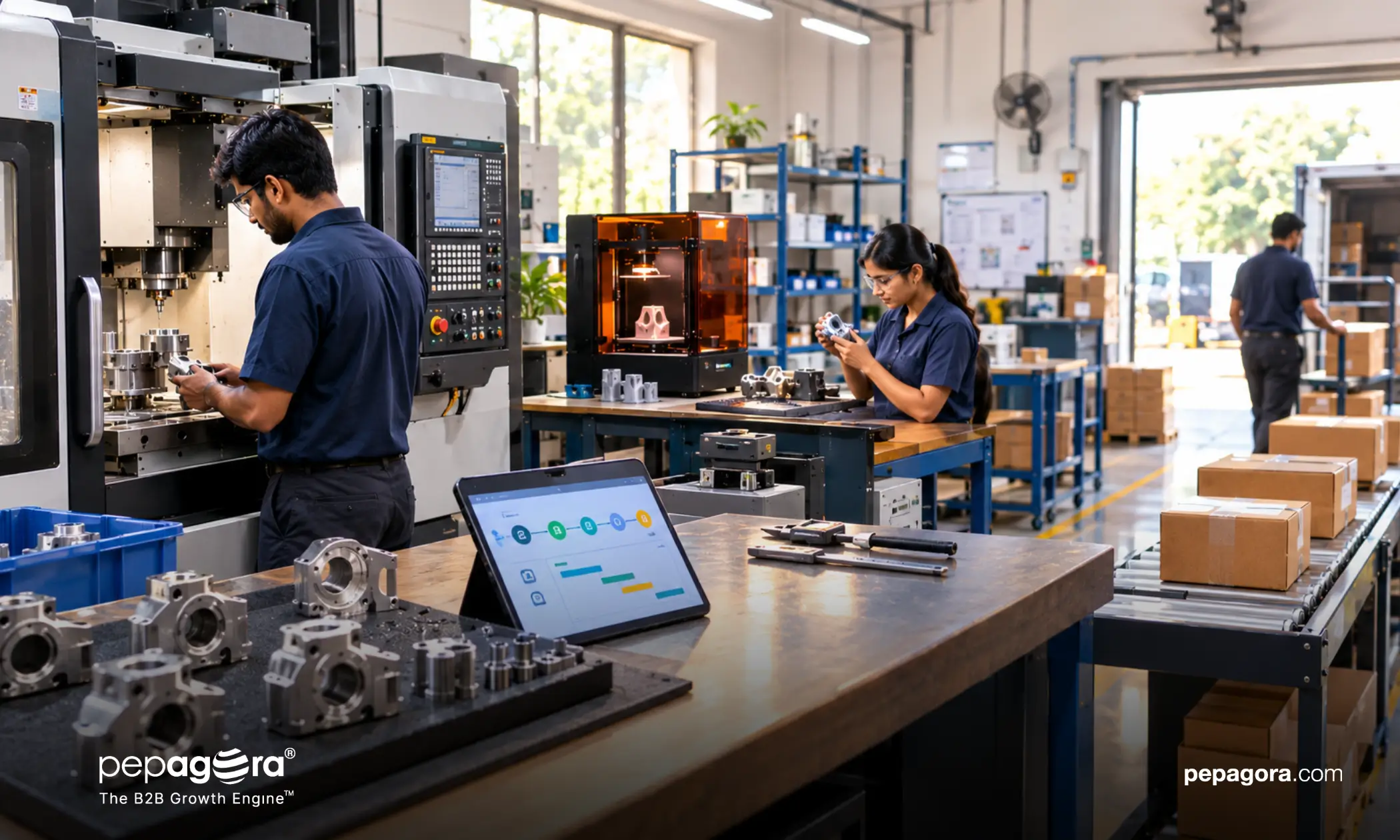
A micro-factory is a relatively small-scale production facility designed to manufacture specific products or components using flexible equipment, digital systems and streamlined processes.
Unlike a traditional factory designed for very high volumes, a micro-factory can focus on smaller batches, customised products, specialised components or regional demand.
This makes the model particularly relevant to MSMEs that may not have the capital or market demand required to operate a large-scale facility.
Distributed Manufacturing Brings Production Closer to Demand
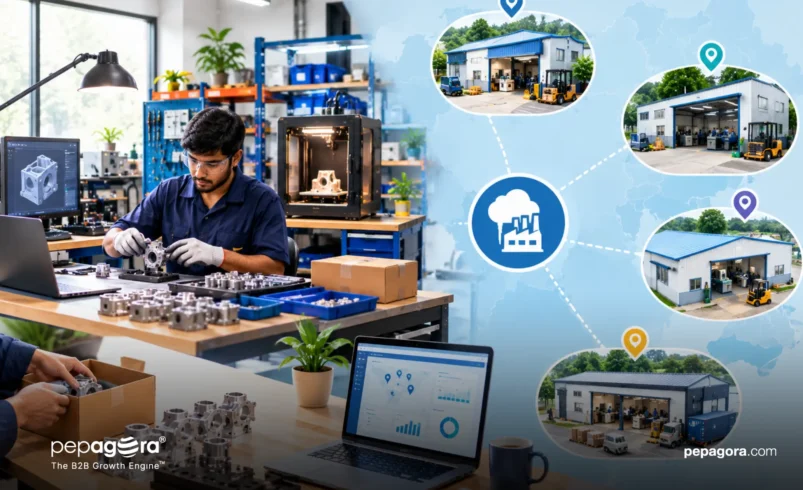
Distributed manufacturing takes the idea further by creating multiple smaller production locations rather than depending entirely on one central factory.
For example, a business serving customers in different regions could produce selected products or components closer to those markets. This can reduce transportation distances, improve response times and provide an alternative when one production location faces disruption.
It can also allow businesses to understand regional demand more closely instead of using one production model for every market.
Lower Capital Requirements Can Help MSMEs Scale
Building a large factory requires significant investment in land, machinery, utilities, employees and infrastructure. For many small businesses, this creates a high barrier to expansion.
Micro-factories can allow businesses to scale more gradually. A company can begin with a focused production unit, validate demand and add capacity when required.
This does not eliminate capital requirements, but it can make expansion more modular.
Instead of making one large investment, businesses can potentially build capacity in stages.
Digital Technology Makes the Model More Practical
Distributed manufacturing becomes easier to manage when production units are digitally connected.
Cloud-based production systems, digital inventory management, remote monitoring, AI-based analytics, CAD/CAM tools and digital twins can help businesses coordinate multiple facilities and maintain consistency.
NITI Aayog’s advanced manufacturing roadmap specifically proposes regionally distributed, cloud-based digital infrastructure that would allow MSMEs to access technologies such as simulation, digital twins and high-performance computing without making the entire investment themselves.
The availability of such shared infrastructure can make advanced manufacturing more accessible to smaller businesses.
Faster Response to Customer Requirements
One of the biggest advantages of distributed production is proximity to demand.
A micro-factory located closer to customers can potentially support shorter production and delivery cycles. This can be especially useful for customised products, replacement components, prototypes and products with frequently changing specifications.
Shorter distances can also reduce dependence on long logistics networks for certain product categories.
Businesses can further strengthen these operations by improving supply-chain visibility across production and delivery activities.
More Resilient Supply Chains
A centralised production model can create concentration risk. If one factory experiences a power outage, equipment failure, labour disruption or supply problem, a large portion of production may be affected.
Distributed manufacturing can provide alternative production capacity across locations. If facilities are designed with complementary capabilities, production can potentially be shifted between units when disruptions occur.
NITI Aayog has identified fragmented supply chains as a constraint on India’s manufacturing competitiveness and highlighted integrated and smart value chains as an important area for improvement.
This makes supply-chain resilience for MSMEs an important consideration when developing distributed manufacturing networks.
Build the Model Around the Right Products
Micro-factories are not suitable for every product. MSMEs should first identify products where flexibility and proximity provide genuine value.
Potential applications include:
- Customised consumer products
●Industrial components
●Replacement parts
●Prototypes and small batches
●Regional products
●Products with shorter demand cycles
Businesses should evaluate production costs, quality requirements, customer location, logistics expenses and expected demand before establishing additional units.
The Future of Small-Scale Manufacturing
Micro-factories do not necessarily mean replacing traditional large factories. Instead, they provide another production model that can complement centralised manufacturing.
For MSMEs, the opportunity lies in combining smaller production units with digital coordination, skilled employees and connected supply chains. India’s MSME competitiveness roadmap also highlights technology development, supply-chain enhancement, AI integration, skills and risk management as areas that can strengthen competitiveness.
Conclusion
Micro-factories and distributed manufacturing can give small businesses a more flexible way to produce, scale and serve customers. By combining smaller facilities with digital technologies, businesses can potentially reduce concentration risks, respond faster to regional demand and expand capacity gradually.
The future of manufacturing may not always be about building one bigger factory. For some MSMEs, it could be about building smarter, smaller and more connected production networks.
Frequently Asked Questions
A micro-factory is a relatively small-scale production facility designed to manufacture specific products or components using flexible equipment, digital systems and streamlined processes.
Distributed manufacturing can help MSMEs produce closer to customers, respond faster to regional demand, reduce concentration risks and expand production capacity more gradually.
No. MSMEs should evaluate production costs, quality requirements, customer location, logistics expenses and expected demand to determine whether a micro-factory model is suitable for their products.