
Industrial automation has always been about making work faster, safer and more consistent. Over the last few years, however, the role of robotics in industry has started to change.
Earlier, the focus was mainly on building a machine that could perform a specific task. Today, the bigger challenge is making that machine useful in a real operating environment, where it may have to work for long hours, deal with changing conditions and operate alongside other machines.
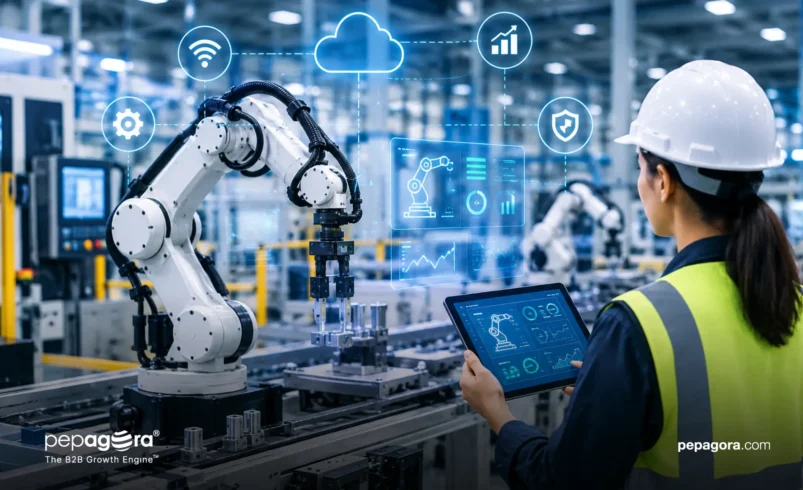
This shift is creating a new generation of industrial robotic systems where hardware, software, connectivity and data work together.
Businesses looking to source automation equipment and robotics can explore available solutions here:
The Challenge Is Bigger Than the Robot
Building a robot that can complete a task is only the beginning.
Once a company has multiple robots deployed across a facility or a large site, a different set of problems appears. Operators need to know which robots are working, which ones need attention, how efficiently they are operating and what is happening when something goes wrong.
This is why monitoring and fleet management are becoming increasingly important.
In my experience working with robotics, one of the biggest gaps is often not the robot itself. It is the software and operational infrastructure around the robot.
A reliable robotic system should make it easy for an operator to understand what is happening without having to physically inspect every machine.
Where AI Actually Helps
AI has an important role in this transition, but it should not be treated as a solution to every automation problem.
In practical robotics, AI is most useful when it solves a specific operational problem. Computer vision can help a robot understand its surroundings. Data from sensors can help identify unusual behaviour. Historical operating data can help predict when a component may require attention.
The goal should not be to add AI simply because it is a popular technology. The goal should be to use the right technology to make the robot more reliable, useful and easier to operate.
The International Federation of Robotics (IFR) also highlights AI applications such as environmental sensing, performance optimisation and connected robotic systems.
What We Are Building at Botnova Robotics
At Botnova Robotics, we are working on robotics from this practical perspective.
One of our projects is Zerion, an autonomous solar panel cleaning robot. Building the robot is one part of the problem. The larger challenge comes when these machines are deployed across large solar installations.
An operator should not have to depend on someone being physically present at every location. They need visibility into the robots, their operating condition and the work they are performing.
This is the problem we are addressing through Systema, our software platform for robotic operations.
Systema is being designed to provide monitoring, fleet management, remote diagnostics and operational insights in one place. The idea is simple: if robots are going to become a larger part of industrial operations, managing those robots should be as straightforward as managing any other critical industrial asset.
From Individual Robots to Fleets
The next stage of industrial robotics will not be defined only by how capable an individual robot is. It will also be defined by how easily companies can operate hundreds of machines together.
Imagine a solar facility with dozens of cleaning robots. An operations team should be able to see the status of the entire fleet from one place, identify a robot that has stopped working, understand the reason and take action remotely.
The same principle can apply to warehouses, factories, inspection systems and other industrial environments.
When software provides this layer of visibility, robotics becomes easier to scale.
The Real Opportunity
The future of industrial automation is not simply about replacing manual work with robots. It is about creating systems that can work reliably in the real world.
The strongest solutions will combine dependable hardware with practical software, good connectivity and useful data. AI will be one part of that ecosystem, but it should support the system rather than become the entire story.
At Botnova Robotics, our focus is on building robotic systems that can move from a prototype in a lab to a reliable product operating in the field.
That, in my view, is where the real opportunity in industrial robotics lies.
FAQs
Industrial robots are becoming more connected because companies need better visibility into machine performance, maintenance, productivity and operating conditions. Connected systems can help operators monitor multiple robots from a central platform.
AI can support industrial robotics through applications such as computer vision, sensor data analysis, predictive maintenance and adaptive operation. Its value depends on whether it solves a specific operational problem.
Fleet management refers to monitoring and managing multiple robots from a central system. It can help operators track robot status, identify problems, review performance and take action without physically checking every machine.
Software provides the operational layer around robotic hardware. It can help with monitoring, diagnostics, fleet management, data collection and remote operations, making large robotic deployments easier to manage.
The future of industrial robotics is moving toward systems that combine reliable hardware, software, connectivity, data and AI. The focus is shifting from individual machines toward connected robotic systems that can operate reliably at scale.
For businesses looking for automation and robotics solutions, Pepagora B2B Marketplace provides a platform to connect with suppliers and explore industrial products and services.