
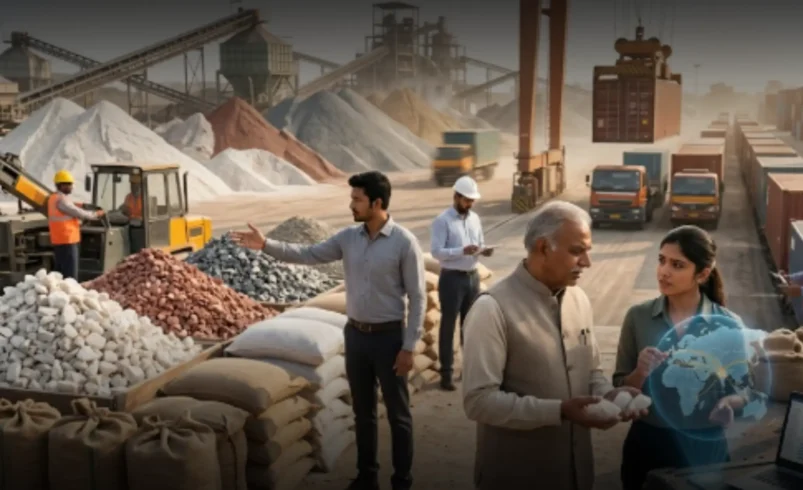

The global industrial minerals industry is witnessing strong expansion in 2026 as manufacturing, infrastructure, ceramics, chemicals, agriculture, and construction sectors continue to increase production capacity. Rising industrialization across emerging economies has significantly boosted demand for industrial minerals, creating major business opportunities for manufacturers, suppliers, wholesalers, and exporters worldwide.
From bentonite manufacturers and gypsum suppliers to kaolin manufacturers and mica suppliers, the industrial minerals sector has become a critical backbone of modern industrial production. Industries today depend heavily on high-quality mineral products for operational efficiency, product quality, and large-scale manufacturing requirements.
As international markets continue to diversify supply chains, industrial minerals manufacturers and exporters are strengthening their position in global B2B trade networks.
Industrial Minerals Are Powering Multiple Industries
Industrial minerals are naturally occurring raw materials used in industrial processing, manufacturing, and commercial applications.
Key industries relying heavily on industrial raw minerals include:
Construction and infrastructure
Paints and coatings
Ceramics and glass
Agriculture and fertilizers
Oil and gas drilling
Electronics and insulation
Automotive manufacturing
Pharmaceuticals and chemicals
The increasing use of mineral products across these industries is driving long-term market growth globally.
Why Demand for Bulk Industrial Minerals Is Increasing
Large manufacturing industries require uninterrupted access to bulk industrial minerals for continuous production operations.
Businesses today increasingly prefer:
Bulk industrial minerals suppliers
Industrial minerals wholesalers
Industrial minerals exporters
Long-term procurement partners
The reasons behind rising bulk demand include:
Large-scale industrial production
Growing infrastructure projects
Export-oriented manufacturing
Cost optimization through volume procurement
Stable supply chain requirements
Bulk procurement models help manufacturers reduce procurement risk and maintain production consistency.
Bentonite Market Sees Strong Industrial Growth
Bentonite manufacturers are experiencing rising demand from sectors such as:
Foundries
Drilling operations
Construction chemicals
Agriculture
Wastewater treatment
Bentonite is widely valued for its absorbent and binding properties.
In the oil and gas sector, bentonite remains an important material in drilling fluids. Construction industries also use bentonite for waterproofing and foundation engineering applications.
Bulk bentonite exporters are increasingly supplying to international markets where infrastructure and industrial activity continue expanding rapidly.
Gypsum Industry Benefits from Construction Expansion
Gypsum suppliers are seeing strong market opportunities due to rapid infrastructure and housing development.
Gypsum plays a major role in:
Cement production
Plaster manufacturing
Drywall systems
Construction finishing materials
The growth of commercial real estate, residential projects, and industrial construction has significantly increased demand for high-quality gypsum suppliers globally.
Many industrial minerals suppliers are also investing in advanced processing systems to improve purity and product consistency.
Kaolin Demand Is Expanding Across Manufacturing Sectors
Kaolin manufacturers are witnessing strong growth due to rising applications in:
Ceramics
Paper manufacturing
Rubber processing
Paint industries
Cosmetics
Pharmaceuticals
Kaolin is valued for its fine particle structure and chemical stability.
Industrial users increasingly demand processed mineral products with strict quality specifications, pushing manufacturers to modernize production systems and improve mineral refinement capabilities.
Mica Industry Continues to Support Industrial Applications
Mica suppliers remain important to industries requiring insulation and heat-resistant materials.
Mica is widely used in:
Electronics
Electrical equipment
Paints and coatings
Automotive components
Construction materials
Bulk mica wholesalers are supplying both domestic and international industries that require durable mineral-based insulation products.
Demand for processed mica products continues to rise due to expanding electronics manufacturing worldwide.
Industrial Minerals Export Market Is Expanding
Industrial minerals exporters are benefiting from growing international demand for raw and processed mineral products.
Countries investing heavily in manufacturing and infrastructure are importing:
Bentonite
Gypsum
Kaolin
Mica
Mineral additives
Construction minerals
Export opportunities are particularly strong in:
Middle East markets
Southeast Asia
Africa
Europe
Global buyers increasingly seek suppliers capable of maintaining:
Stable production capacity
Competitive pricing
International quality standards
Reliable logistics support
India Is Emerging as a Major Industrial Minerals Hub
India possesses significant reserves of industrial raw minerals and continues strengthening its position in global mineral exports.
The country has become an important supplier of:
Bentonite
Mica
Kaolin
Gypsum products
Processed industrial minerals
Indian industrial minerals manufacturers benefit from:
Large mineral reserves
Competitive production costs
Expanding processing infrastructure
Strong export connectivity
Many Indian exporters are now targeting higher-value processed mineral markets instead of depending only on raw material exports.
Technology Is Transforming Mineral Processing
Modern mineral processing technologies are helping suppliers improve product quality and production efficiency.
Industrial minerals manufacturers are increasingly adopting:
Automated sorting systems
Advanced grinding technologies
AI-based quality inspection
Dust control systems
Digital inventory management
Technology adoption is becoming important for maintaining competitiveness in global markets.
Industrial buyers today demand greater consistency, purity, and technical compliance from suppliers. To understand how industrial equipment and technology are driving modern manufacturing growth, read Industrial Equipment Driving Modern Manufacturing.
Sustainability Is Becoming a Major Industry Focus
Environmental regulations are gradually reshaping the industrial minerals sector.
Governments and global buyers are increasingly focusing on:
Sustainable mining practices
Waste reduction
Water conservation
Land restoration
Energy-efficient processing
Industrial minerals suppliers that follow environmentally responsible practices are gaining stronger acceptance in international markets.
Sustainability reporting is also becoming important for export-oriented businesses.
Challenges Facing Industrial Minerals Suppliers
Despite strong market opportunities, the sector continues to face several operational challenges.
Logistics and Transportation Costs — Mineral transportation remains expensive due to heavy bulk movement requirements.
Environmental Regulations — Mining and extraction activities face increasing regulatory oversight.
Price Volatility — Global commodity price fluctuations impact profitability.
Quality Standardization — International buyers expect strict quality consistency.
To remain competitive, suppliers are investing in operational efficiency and value-added processing capabilities.
What Buyers Expect from Industrial Minerals Suppliers in 2026
Industrial buyers today prioritize more than just low pricing.
They increasingly seek:
High-quality industrial minerals supplier networks
Consistent product specifications
Bulk supply capability
Technical support
Timely delivery systems
Export documentation compliance
A premium industrial minerals supplier capable of maintaining reliability and technical quality gains stronger long-term business relationships.
The Rise of Value-Added Mineral Products
Instead of exporting only raw minerals, many businesses are now focusing on processed and value-added mineral products.
This shift improves:
Profit margins
Export competitiveness
Product differentiation
International market positioning
Processed mineral products are seeing increasing demand across advanced industrial sectors.
Future Outlook for Industrial Minerals Industry
The long-term outlook for industrial minerals remains highly positive.
Key growth drivers include:
Global infrastructure expansion
Industrial manufacturing growth
Renewable energy projects
Construction sector demand
Electronics manufacturing
Agricultural modernization
Industrial minerals manufacturers, suppliers, wholesalers, and exporters who modernize operations and improve quality standards are expected to gain the strongest market advantage.
Final Thoughts
The industrial minerals industry continues to play a vital role in supporting global manufacturing, construction, energy, and industrial development. Rising demand for mineral products across multiple sectors is creating strong opportunities for suppliers capable of delivering quality, consistency, and scale.
From bentonite manufacturers and gypsum suppliers to kaolin manufacturers and mica wholesalers, businesses across the mineral supply chain are becoming increasingly important to global industrial growth.
In 2026, successful industrial minerals businesses will compete not only on resource availability but also on operational efficiency, sustainability, processing capability, and supply chain reliability.
