
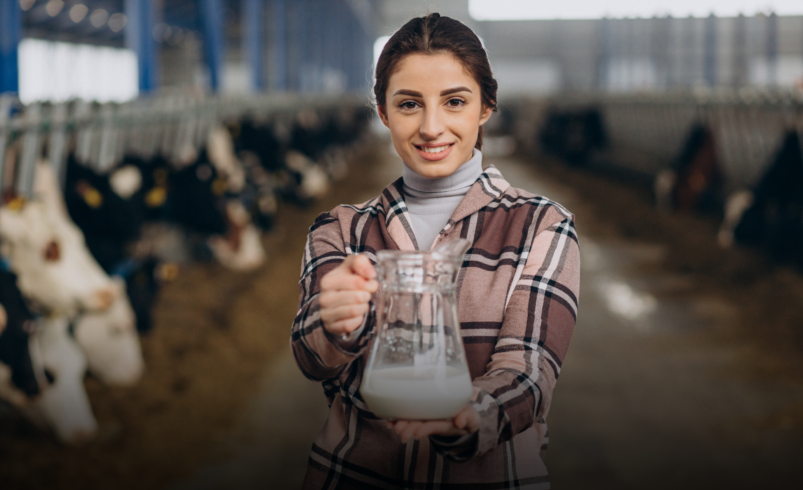

Dairy Products & Alternatives
The global dairy industry stands at a crossroads. While multinational supply chains have dominated for decades, a quiet revolution is taking shape in cities and rural regions alike. Dairy Products & Alternatives represent a fundamental shift in how consumers approach food sourcing, quality, and trust. Producers are beginning to question centralized distribution models, asking whether quality and transparency deserve priority over sheer volume and convenience. This shift represents more than a trend; it signals a fundamental reimagining of how dairy reaches tables, how trust is built, and what freshness truly means in modern food systems.
The Limitations of Industrial Scale
Industrial dairy production operates on predictability and uniformity. Milk is pooled from numerous farms, standardized through intense processing, stored in vast refrigerated facilities, and distributed through multi-tier logistics networks. While this approach maximizes production efficiency, it inherently distances producers from consumers and obscures the actual journey of food from cow to glass.
According to Nature Food Journal, industrial-scale dairy operations struggle with traceability challenges. When contamination or quality issues arise, pinpointing the source becomes complex, often affecting millions of consumers simultaneously. The speed of mass distribution becomes a liability rather than an asset.
The Emerging Local Dairy Model
Progressive dairy entrepreneurs are building alternatives by designing systems around proximity, transparency, and direct relationships. These networks connect specific producers to specific communities, often within a 50-100 kilometer radius. Production volumes remain smaller but deliberate.
Aspect | Industrial Dairy | Local Network Model |
Supply radius | 500+ km | 50-100 km |
Processing delay | 5-7 days | 6-12 hours |
Quality verification | Batch testing | Real-time tracking |
Consumer connection | Anonymous | Known producer |
Waste management | Centralized | Local recycling |
Sustainability impact | High carbon footprint | Minimal environmental cost |
Why Consumers Are Switching
Fresh milk delivered within hours retains its natural enzymes, beneficial bacteria, and nutritional density that industrial processing destroys. This isn’t nostalgia—it’s measurable science. Paneer made from fresh milk has a superior texture. Yogurt ferments naturally without stabilizers. Ghee develops cleaner flavor profiles.
Consumer research shows that 67% of dairy buyers in metro areas actively seek local alternatives when available, prioritizing taste and transparency over price convenience. Trust becomes the primary purchase driver, not promotional campaigns.
Technology Enabling Localization
Digital platforms are making localized dairy networks economically viable. Cold-chain management apps, demand forecasting tools, and direct-to-consumer logistics software reduce operational friction that previously made small-scale distribution impossible.
Pepagora, for instance, demonstrates how digital marketplaces can connect local dairy producers with nearby consumers, enabling real-time inventory management and transparent pricing. According to Harvard Business Review, such platforms are fundamentally restructuring agricultural commerce by removing unnecessary intermediaries.
Beyond Dairy: Plant-Based Alternatives
The same localization logic applies to dairy alternatives. Fresh oat milk, almond milk, and coconut-based products made in smaller batches and distributed quickly maintain superior nutritional profiles and taste compared to long-shelf-life versions. The International Journal of Food Sciences confirms that plant-based dairy alternatives degrade significantly after 3 weeks of storage.
Building Community Food Systems
The real value of local dairy networks extends beyond individual purchases. They create employment in rural areas, reduce transportation emissions, support biodiversity through smaller-scale farming, and rebuild relationships between producers and consumers that industrial systems erased.
FAQs
Local dairy typically stays fresh 5-7 days when refrigerated, compared to 2-3 weeks for industrial milk. The shorter shelf life indicates minimal processing and natural preservation methods.
Local dairy networks often have similar pricing to store-bought alternatives. Premium pricing reflects reduced processing, transparent sourcing, and superior nutritional content that justifies the investment.
Farmers markets, CSA programs, digital platforms, and direct producer relationships provide primary access points. Apps and websites now make finding nearby dairy sources increasingly convenient in urban areas.
Yes, many local networks now offer fresh oat milk, almond milk, and coconut-based products. These alternatives, when produced locally and consumed quickly, offer superior nutrition compared to mass-produced versions.
Local networks provide direct traceability. Consumers can immediately contact producers about quality concerns, enabling faster resolution compared to industrial systems.

As the Founder of Astra Dairy, a direct-to-consumer food brand focused on fresh, made-to-order dairy products and daily essentials, he has developed operational models that prioritize freshness, traceability, and customer trust.
His insights center on strengthening agri-value chains, improving supply chain transparency, and enabling sustainable growth frameworks that connect producers directly with modern consumers.