
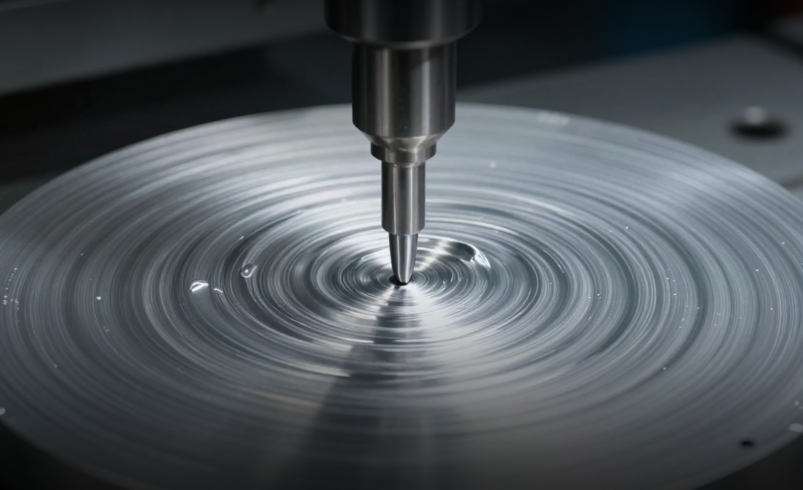

Friction-based manufacturing has become one of the most transformative areas in mechanical engineering. With a career blending rigorous research and practical innovation, contributions span Linear Friction Welding (LFW), Friction Stir Welding (FSW), Friction Stir Processing (FSP), additive manufacturing, and prototype development. By bridging theory with hands-on engineering, solid-state joining technologies are being made more accessible to industries and academic institutions.
The Expanding Role of Friction-Based Systems
Manufacturing technology has evolved from supportive tools into essential systems that drive efficiency and reliability. Research emphasizes the physics of deformation, heat generation, and microstructural refinement in solid-state processes. The focus on joining lightweight and dissimilar materials is particularly relevant to aerospace, automotive, defence, and infrastructure sectors.
For those seeking reliable solutions, the Welding Machines & Equipment suppliers in Pepagora showcase a wide range of verified products designed to meet the needs of both small scale workshops and large scale industrial producers.
Linear Friction Welding: High-Integrity Joints
Contributions to Linear Friction Welding demonstrate its role as one of the most effective joining methods for aerospace structures and titanium components. Key insights include:
- Machine stiffness and force capacity
- Tooling challenges and friction interface behaviour
- Flash formation and material flow patterns
- Oscillation amplitude and frequency control
Developing in-house LFW setups shows how advanced joining technologies can be adapted for both industrial and academic R&D environments.
According to studies in materials science journals, Linear Friction Welding produces defect free welds with joint efficiency above 100%, meaning the welded joint often exceeds the strength of the base material itself.
Friction Stir Welding and Processing: Accessible Innovation
Friction Stir Welding and Processing form another cornerstone of this work. Prototypes include:
- Tool adapters enabling FSW/FSP on conventional milling machines
- Universal fixtures for repeatable welding experiments
- Modular setups for variable-geometry processing
These innovations bridge the gap between commercially available machines and the needs of smaller workshops or laboratories, making advanced welding research more accessible.
Prototype Engineering: Turning Ideas into Mechanisms
Engineering prototypes highlight an iterative approach design, test, refine that ensures practical usability. The portfolio includes double-stroke mechanical systems, friction stir welding adapters, universal fixtures, and simplified solutions for laboratories. These mechanisms reflect the ability to transform concepts into cost-effective, real-world applications.
Industry Growth and Accessibility
Globally, friction-based technologies are reshaping industry economics by reducing costs and improving reliability. Emphasis on low-cost tooling ensures that universities and MSMEs can adopt advanced systems without prohibitive investment.
Pepagora empowers equipment manufacturers to grow by connecting industries with trusted suppliers and providing access to reliable, high-quality tools.
FAQs
They enable defect-free, high-strength joints in critical industries such as aerospace and automotive, reducing reliance on conventional fusion welding.
Prototypes like universal fixtures and tool adapters allow smaller labs and workshops to experiment with advanced processes without investing in expensive machinery.
Pepagora connects manufacturers with trusted suppliers, offering verified Welding Machines & Equipment and other industrial tools.
Designs emphasize cost-effective, energy-efficient solutions that align with global sustainability goals.
Hybrid additive processes, low-cost tooling, and integration with digital monitoring systems are redefining how industries adopt these technologies.

He is internationally recognized for research excellence and innovation-driven contributions, with strong academic visibility across major indexing platforms.
Ranked among the global top 2% scientists, he has published extensively and supervised doctoral research. He aims to support readers in understanding modern manufacturing technologies and solutions through well-structured and informative content.