Robotics is the fast-growing industry. There are many types of robots like humanoid, autonomous robots, Surgical robot, Rovers, Drones, Industrial robots, Marine Robots etc. come to India we are mostly into industrial robots and other robots ae in developing stage. I am working as a robot programmer in industrial automation. I am familiar with Fanuc robot and its applications. Industrial automation is shaping the manifesting industry by increasing production and reduce people effort. Come to my role I work as a simulation engineer in that we will understand the problems of the robotic cell and rectify it before the actual deployment. it’s an impressive engineering excellence aRobot can perform a surgery and reduce doctors’ efforts. Still, we need go a lot in robotics. For more information about industrial automation solutions and robotic applications, visit Pepagora’s Automation Equipment & Robotics category.
How Industrial Robots Work in Manufacturing
Industrial robots are used in automotive, electronics, metal fabrication, packaging and material handling. They perform welding, painting, assembly, machine tending, palletising, pick-and-place operations and inspection. Robots help manufacturers improve consistency and reduce repetitive manual work.
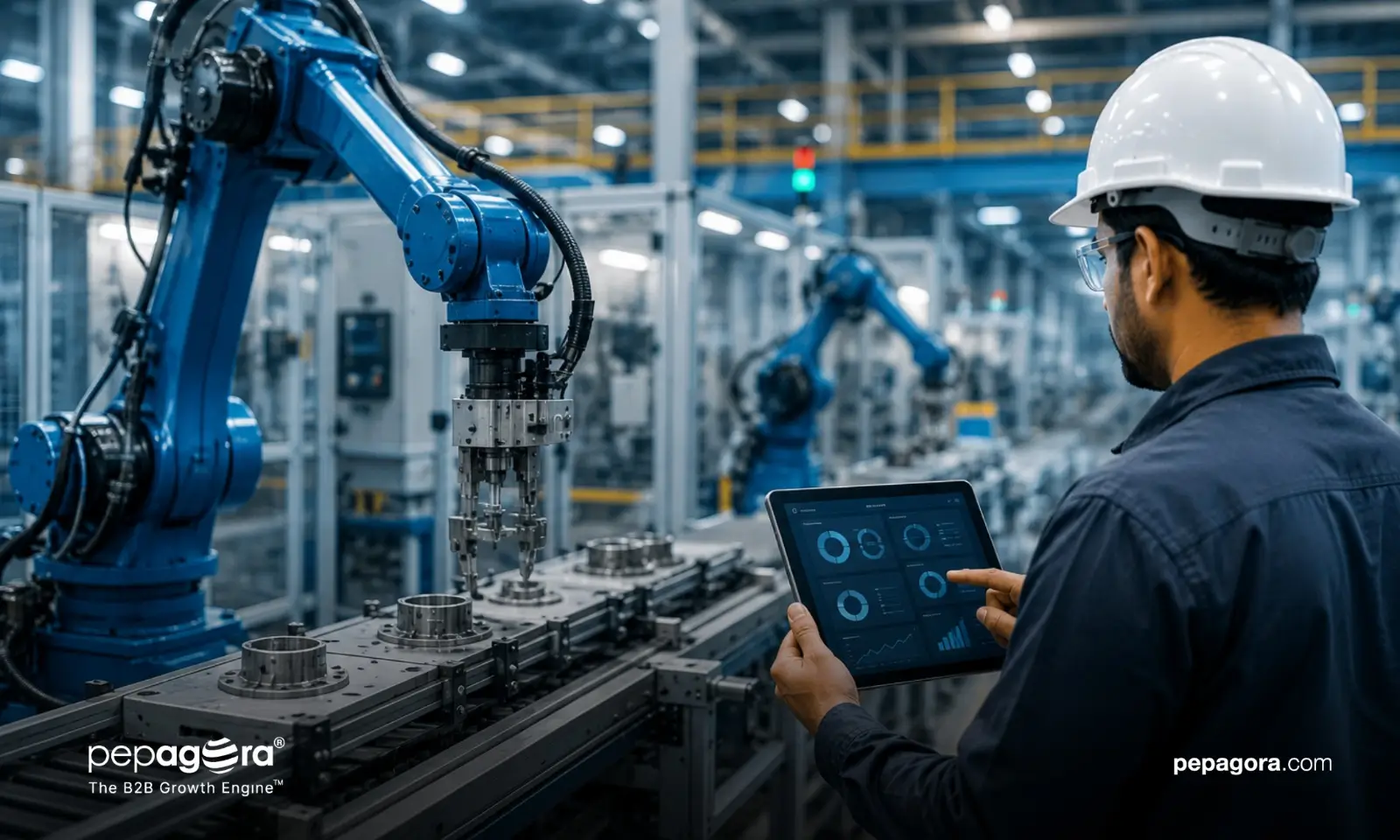
A robotic cell includes a controller, tooling, sensors, fixtures, conveyors, machines and safety equipment. These components must work together. In machine tending, for example, the robot receives a signal, loads a component, waits for machining and removes the finished part. A timing or communication issue can interrupt the process.
Why Simulation Is Important Before Deployment
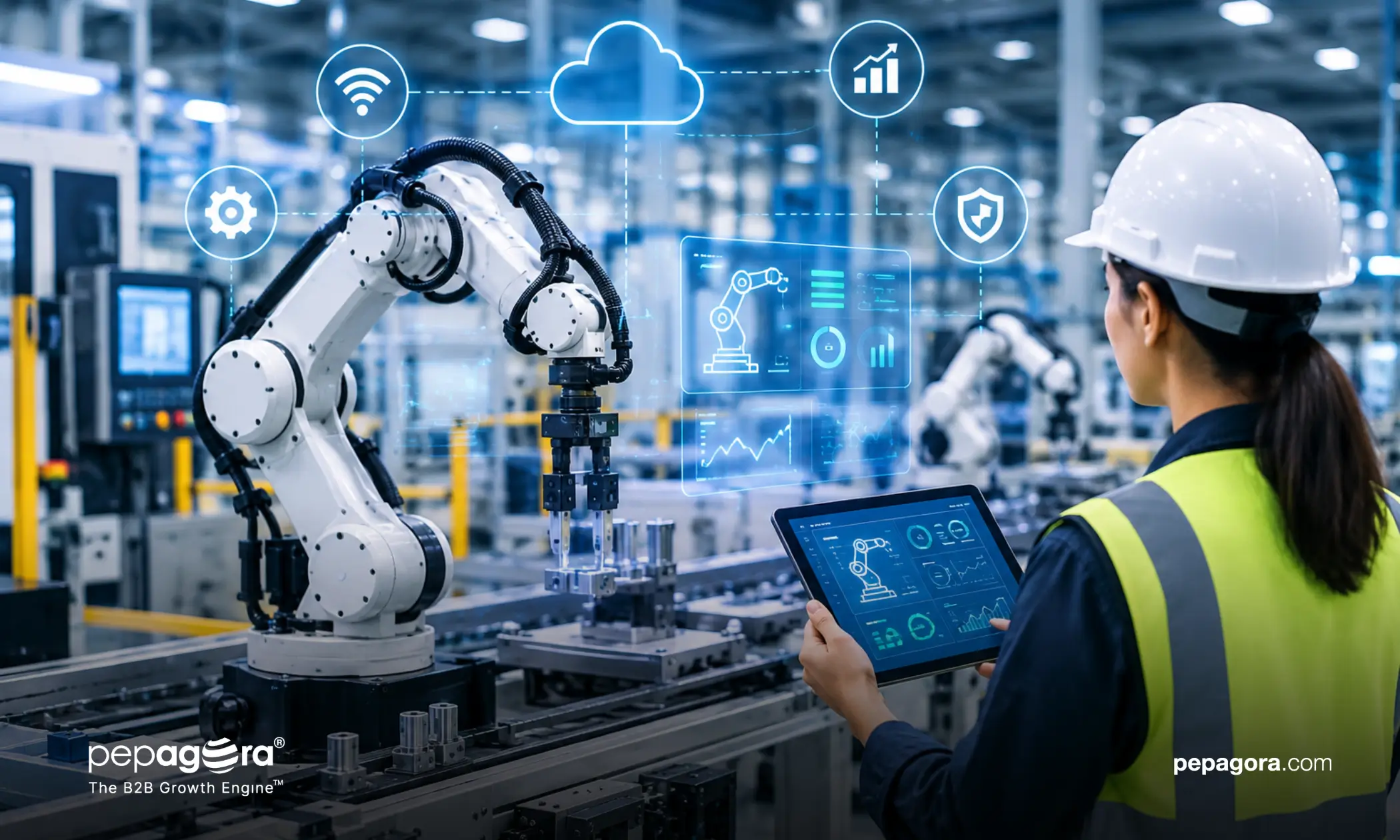
Simulation lets engineers study a robotic cell virtually before factory installation. They can create the layout, position equipment, define movements and test the sequence. This helps identify collisions, unreachable positions, poor approach angles and cycle-time problems early.
Engineers must check the complete process, including reach, payload, tool orientation, joint limits, paths and signals exchanged with other equipment. Simulation can reduce design changes during commissioning.
The National Institute of Standards and Technology explains how digital twins can support the design, testing, commissioning and reconfiguration of robot systems. Its research, Digital Twins for Robot Systems in Manufacturing, is a useful reference for understanding virtual validation.
FANUC Programming and Application Knowledge
Robot programming requires an understanding of movement, coordinate systems, tool frames, work frames, input and output signals, and the production task. Working with FANUC robots also involves understanding program structure, motion instructions, positions and process commands. A programmer must consider the application, not just the movement of the robot arm.
For example, a welding application needs the correct torch angle, speed and path, while a pick-and-place application needs accurate picking and placing positions. The program must account for the workpiece, tooling and surrounding equipment. It should also be organised so that engineers can troubleshoot it and make future changes.
Simulation and programming work together. A program can be reviewed virtually and adjusted before it is tested on the physical system. However, simulation does not replace on-site validation. The installed robot, tooling, fixtures, safety devices and production conditions must still be checked during commissioning.
Safety and System Integration
Safety is essential in every robotic project. Industrial cells can involve high-speed movement, heavy payloads, sharp tools and moving machinery. Engineers must assess risks and plan suitable safeguards, which may include guarding, interlocked doors, emergency stops and safety scanners. Measures depend on the application and applicable standards.
Reliable operation also depends on accurate fixtures, consistent part positioning and communication between the robot controller, programmable logic controller, machines and sensors. Machine vision and other sensors can help a system respond when parts vary in position. Manufacturers can learn more about connected robots and industrial applications through the International Federation of Robotics.
Opportunities for Robotics in India
India has opportunities to expand industrial robotics across automotive, engineering, electronics, pharmaceuticals and food processing. Small and medium-sized manufacturers can begin by automating a specific operation, such as welding, machine tending or material handling, rather than changing an entire factory at once.
Adoption requires planning, trained programmers, maintenance and integration. Companies should assess cycle time, product variation, space, costs and expected returns.
The Future Needs Skilled Engineers
Robotics will increasingly connect with AI, machine vision, sensors, data systems and simulation. These technologies can support flexible production, while collaborative and mobile robots create new factory possibilities.
For engineers, this creates opportunities to develop skills in robot programming, offline programming, simulation software, electrical and mechanical coordination, troubleshooting and safety practices. Continuous learning is important because every application has different production needs, equipment limitations and technical challenges.
Skilled engineers identify production problems, select robots, design cells, program applications and validate movements. Robotics is not simply about replacing manual work; it improves how manufacturing is planned, performed and monitored. Careful simulation and responsible deployment can support productive manufacturing in India and worldwide.
FAQs About the Future of Fashion Retail
Industrial automation uses robots such as articulated robots, SCARA robots, Cartesian robots, collaborative robots and delta robots. They perform welding, assembly, painting, material handling and pick-and-place operations.
A robot programmer develops and tests robot programs to perform specific manufacturing tasks. The role includes defining movements, positions, tool settings, signals and process sequences.
Robotic simulation helps engineers identify collisions, movement errors, reachability issues and cycle-time problems before installing the actual robotic cell.
FANUC robots are used in industrial applications such as welding, painting, assembly, machine tending, material handling and packaging.