
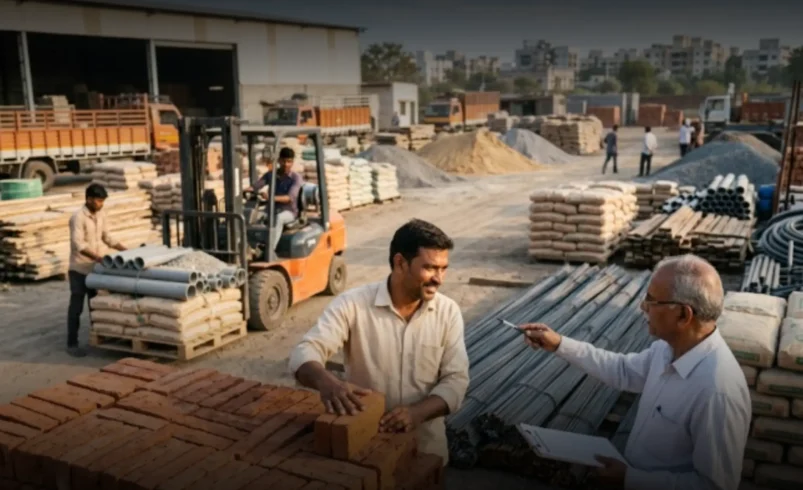

The global construction industry is entering a new growth cycle in 2026, fueled by infrastructure expansion, urban development, industrial projects, and rising housing demand. At the center of this growth lies one critical sector: construction raw materials. From cement sand bricks to large-scale industrial supplies, demand for reliable sourcing is increasing rapidly across domestic and international markets.
Contractors, developers, infrastructure companies, and distributors are now actively seeking dependable building materials suppliers capable of delivering quality products at scale. As a result, construction raw materials manufacturers, suppliers, wholesalers, and exporters are witnessing strong business opportunities across multiple regions.
The modern construction sector is no longer driven only by price. Buyers today prioritize supply consistency, logistics efficiency, product quality, and long-term procurement partnerships.
Global Demand for Construction Raw Materials Is Rising
Rapid urbanization continues to drive construction activity worldwide.
Key sectors contributing to this growth include:
Residential housing projects
Commercial real estate development
Smart city infrastructure
Industrial construction
Transportation and logistics infrastructure
Governments across Asia, the Middle East, and Africa are investing billions into roads, ports, railways, airports, and urban infrastructure. This has significantly increased demand for:
Bulk construction materials
Cement sand bricks
Structural building products
Industrial-grade construction inputs
Industry analysts expect the global construction materials market to maintain strong growth throughout the decade due to expanding infrastructure investments.
Why Construction Material Supply Chains Matter More Than Ever
Construction projects depend heavily on timely availability of raw materials.
Even minor disruptions in supply can delay projects, increase costs, and impact profitability.
This is why developers increasingly rely on trusted:
Construction raw materials suppliers
Construction raw materials wholesalers
Bulk building materials wholesalers
Construction raw materials exporters
Modern supply chains are becoming more integrated and technology-driven to improve efficiency and reduce procurement risks.
Cement Remains the Backbone of the Construction Industry
Among all construction materials, cement continues to dominate the industry.
Cement manufacturers play a critical role in supporting infrastructure and real estate growth worldwide.
Demand for cement is being driven by:
Large infrastructure projects
Residential construction
Commercial buildings
Industrial facilities
Cement suppliers are focusing on improving:
Production efficiency
Sustainability standards
Bulk transportation systems
Regional distribution networks
Bulk cement exporters are also benefiting from rising international demand, especially in developing economies with large infrastructure pipelines.
Sand Supply Chains Are Facing Increasing Pressure
Sand suppliers are becoming increasingly important due to rising global construction demand.
Sand is essential for:
Concrete production
Masonry work
Infrastructure foundations
Road construction
However, environmental restrictions and over-extraction concerns are creating supply challenges in several regions.
This has resulted in:
Rising transportation costs
Regional shortages
Increased regulatory scrutiny
Construction companies are therefore prioritizing suppliers with stable sourcing networks and reliable logistics capabilities.
Bricks Continue to Be a Core Building Material
Despite advancements in modern construction technologies, bricks remain one of the most widely used materials globally.
Brick manufacturers are adapting to changing market needs by producing:
Fly ash bricks
Clay bricks
Concrete blocks
Lightweight construction bricks
High-quality bricks suppliers are gaining strong demand due to increasing focus on durability and construction efficiency.
Builders today prefer brick suppliers capable of maintaining:
Uniform product quality
Timely deliveries
Bulk supply capability
Competitive pricing
Infrastructure expansion and affordable housing projects continue to support strong brick demand.
Bulk Construction Materials Procurement Is Growing
Large developers and infrastructure firms increasingly rely on bulk construction materials procurement models.
Working with a premium construction materials supplier offers several advantages:
Better pricing through volume purchasing
Stable supply for long-term projects
Reduced procurement delays
Better quality consistency
Improved inventory planning
Bulk procurement is becoming especially important for megaprojects where material shortages can significantly affect timelines.
Construction Raw Materials Export Market Is Expanding
Construction raw materials exporters are seeing new opportunities due to global infrastructure growth.
International demand remains strong for:
Cement products
Processed sand materials
Construction bricks
Industrial building inputs
Bulk cement exporters and construction raw materials exporters are benefiting from growing cross-border infrastructure projects, especially in developing regions.
Export competitiveness now depends heavily on:
Freight efficiency
Product quality standards
Packaging and handling
Regulatory compliance
Suppliers with strong logistics capabilities are gaining a clear advantage in international markets.
Sustainability Is Reshaping the Construction Materials Industry
Environmental concerns are changing how construction materials are produced and sourced.
Governments and developers are increasingly demanding:
Low-carbon cement production
Recycled construction materials
Sustainable sourcing practices
Energy-efficient manufacturing systems
Construction raw materials manufacturers are investing in cleaner technologies to meet new sustainability requirements.
The shift toward green construction is expected to accelerate further over the coming years. To understand how sustainable sourcing is becoming a core competitive strategy across industries, read Why Sustainable Sourcing is the New Industry Standard?
Technology Is Improving Supply Chain Efficiency
Digital transformation is changing the construction materials business.
Leading building materials suppliers are using:
Digital inventory systems
AI-based demand forecasting
GPS-enabled logistics tracking
Automated warehousing solutions
Online B2B procurement platforms
These technologies help reduce delays, improve transparency, and optimize procurement planning.
Digital sourcing is also making it easier for buyers to compare suppliers and manage bulk orders efficiently.
Challenges Facing Construction Raw Materials Suppliers
Despite strong demand, the industry continues to face several operational challenges.
Rising Transportation Costs — Fuel price fluctuations continue to impact logistics expenses.
Raw Material Availability — Certain regions face shortages due to environmental regulations and mining restrictions.
Price Volatility — Global commodity price fluctuations affect procurement planning.
Infrastructure Bottlenecks — Weak transport infrastructure in some markets slows delivery timelines.
To overcome these challenges, suppliers are investing in stronger regional distribution networks and diversified sourcing systems.
What Buyers Expect from Suppliers in 2026
Construction companies today are more selective when choosing suppliers.
Key expectations include:
Consistent Product Quality — Materials must meet engineering and safety standards.
Reliable Delivery Schedules — Project timelines depend heavily on material availability.
Competitive Pricing — Buyers seek long-term cost stability through reliable contracts.
Bulk Supply Capability — Large projects require uninterrupted high-volume deliveries.
Transparent Communication — Clear coordination reduces project delays and procurement confusion.
A premium construction materials supplier capable of meeting these expectations can build long-term industry relationships.
India’s Construction Materials Market Is Expanding Rapidly
India remains one of the fastest-growing construction markets globally.
Government investments in:
Smart cities
Highways
Rail infrastructure
Affordable housing
Industrial corridors
are significantly increasing demand for construction raw materials.
Domestic cement manufacturers, brick suppliers, and construction raw materials wholesalers are expanding capacity to meet rising demand.
India is also strengthening its position as a regional export hub for select construction materials.
Future Outlook for the Construction Materials Industry
The construction raw materials sector is expected to remain highly active throughout the next decade.
Key future trends include:
Green building materials adoption
Smart supply chain systems
Increased automation in manufacturing
Growth in prefabricated construction
Expansion of global infrastructure projects
Businesses that combine supply reliability with operational efficiency and sustainability will gain the strongest competitive advantage.
Final Thoughts
The construction raw materials industry is becoming increasingly strategic in the global infrastructure economy. Demand for bulk construction materials, cement sand bricks, and industrial building supplies continues to rise as countries expand urban and industrial development.
Construction raw materials suppliers, wholesalers, exporters, and manufacturers who invest in technology, logistics, sustainability, and quality control will be best positioned for long-term growth.
In 2026, successful businesses in the building materials sector will not compete only on price. They will compete on reliability, efficiency, and trust.
