
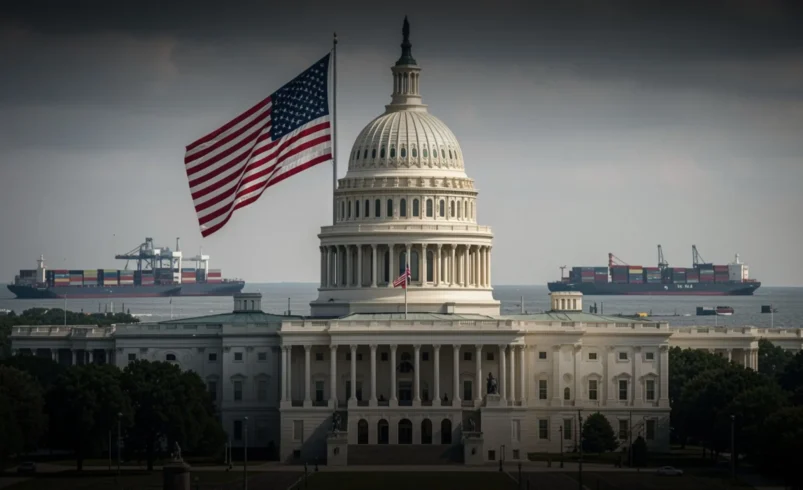

In a move that could shake up global trade, the United States has launched a massive investigation into 60 countries, including India, to determine if they are doing enough to stop goods made with forced labor from entering the market.
Here is a simple breakdown of what is happening and why it matters.
What is happening?
The U.S. Trade Representative (USTR), Jamieson Greer, has initiated a probe under a law called Section 301. The investigation focuses on whether 60 of America’s top trading partners are failing to ban or block imports produced using forced labor.
The U.S. argues that:
- It’s Unfair: Countries that use forced labor have “artificial cost advantages,” making it impossible for honest American businesses and workers to compete fairly.
- It’s a Violation: There is a global consensus against forced labor, yet the U.S. claims many governments aren’t enforcing bans effectively.
What is “Section 301”?
Think of Section 301 as a “Trade Investigation Tool.” It allows the U.S. government to look into any foreign country’s policies that it thinks are “unreasonable” or “discriminatory” toward American commerce.
- The Consequence: If the investigation finds that a country is indeed acting unfairly, the U.S. can legally impose retaliatory tariffs (taxes on imports) or other trade restrictions.
Why is this happening now?
This isn’t happening in a vacuum. There are two major reasons for the timing:
Supreme Court Ruling: Recently, the U.S. Supreme Court struck down President Trump’s previous sweeping global tariffs, calling them illegal. The administration is now using Section 301 as a more “legally robust” way to bring those tariffs back.
Trade Pressure: This is the second major probe in just one week. A few days ago, the U.S. launched a separate investigation into 16 countries (also including India) over “excess manufacturing capacity”, essentially accusing them of flooding the world with cheaper goods.
Which countries are involved?
While the list includes 60 economies, the “big names” under the scanner are:
India
China
The European Union
The United Kingdom
Japan
South Korea
Vietnam
Notably, Canada, one of the U.S.’s biggest trading partners, was left off the list.
What’s next?
The U.S. isn’t imposing taxes just yet. There is a formal process:
April 15, 2026: Deadline for the public and businesses to submit comments.
April 28, 2026: Public hearings will begin.
July 2026: The USTR hopes to finish the investigation by mid-summer, which is when temporary tariffs are set to expire.
The Bottom Line
If the U.S. isn’t satisfied with how India and others are policing forced labor, you can expect to see higher prices on imported goods and a more aggressive trade stance from Washington by this summer.
Get more business related information on
blog.pepagora.com